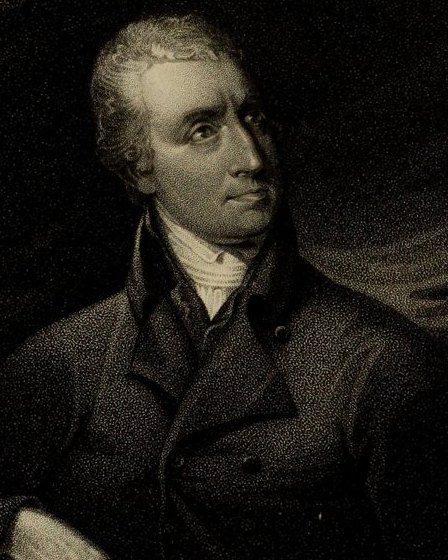
Who they were
Whitaker was born at Rainham, in Norfolk, on 8 June 1759.
From Charles William Sutton, "Whitaker, Thomas Dunham", Dictionary of National Biography, vol. 61 (1900): “born at Rainham on 8 June 1759” See the page
He went to St John's College, Cambridge, and took a law degree in 1781.
From Charles William Sutton, "Whitaker, Thomas Dunham", Dictionary of National Biography, vol. 61 (1900): “He took the degree of LL.B. in November 1781, intending to enter the legal profession” See the page
He gave up the law when his father died, and settled at Holme, in Cliviger.
From Charles William Sutton, "Whitaker, Thomas Dunham", Dictionary of National Biography, vol. 61 (1900): “which purpose was set aside on the death of his father in the following year, when he settled at Holme” See the page
He planted trees on his land at Holme. The Society of Arts gave him its gold medal for planting the most larches in one year.
From Charles William Sutton, "Whitaker, Thomas Dunham", Dictionary of National Biography, vol. 61 (1900): “He received the gold medal of the Society of Arts for the greatest number of larch trees planted” See the page
In 1809 he became vicar of Whalley, the post he had most wanted.
From Charles William Sutton, "Whitaker, Thomas Dunham", Dictionary of National Biography, vol. 61 (1900): “In 1809 he attained the great object of his wishes in becoming vicar of the extensive parish of Whalley, Lancashire.” See the page
He wrote at least twenty-eight articles for the Quarterly Review.
From Charles William Sutton, "Whitaker, Thomas Dunham", Dictionary of National Biography, vol. 61 (1900): “wrote at least twenty-eight articles in the 'Quarterly Review' between 1809 and 1818” See the page
The young J. M. W. Turner drew for his books. Some of Turner's early drawings are in Whitaker's first book.
From Charles William Sutton, "Whitaker, Thomas Dunham", Dictionary of National Biography, vol. 61 (1900): “Some of this artist's early drawings appeared in Whitaker's first book.” See the page
He died at Blackburn vicarage on 18 December 1821. His coffin was a tree he had planted himself, and he had said how to hollow it out.
From Charles William Sutton, "Whitaker, Thomas Dunham", Dictionary of National Biography, vol. 61 (1900): “He died at Blackburn vicarage on 18 Dec. 1821, and was interred at Holme, his coffin being made out of a tree of his own planting, hollowed out by his own directions.” See the page
In Craven
At fifteen, in 1774, he stayed for a short time with the Rev. W. Sheepshanks at Grassington.
From Charles William Sutton, "Whitaker, Thomas Dunham", Dictionary of National Biography, vol. 61 (1900): “after spending a short time with the Rev. W. Sheepshanks of Grassington in Craven” See the page
Speight wrote in 1892 that the public knew little about Craven until Whitaker began his History.
From Harry Speight, The Craven and North-West Yorkshire Highlands (London: Elliot Stock, 1892): “this was practically the sum and extent of public knowledge on this romantic corner of Yorkshire until the Rev. Thomas Dunham Whitaker” See the page
Speight said Whitaker's book of 1805 was large and costly, and dealt only with families and history.
From Harry Speight, The Craven and North-West Yorkshire Highlands (London: Elliot Stock, 1892): “His investigations, which were purely genealogical and historical, resulted in a large and costly volume” See the page
92 quotes on 61 places
A bigger dot means more quotes. Tap a dot to open the place.
What they wrote
-
Where Craven ends, and 6 more
1805
“The Deanery of Craven consists of the parishes of Mitton, Slaidburne, Gisburne”
Thomas Dunham Whitaker, clergyman and historian of Craven. See the page
Source and note
Thomas Dunham Whitaker, The History and Antiquities of the Deanery of Craven (London, 1805), page 8.
The list runs on to Kettlewell: twenty-five parishes from Mitton and Slaidburn in Bowland to Ilkley in lower Wharfedale and Kettlewell at the top of it.
-
Bolton Priory, and 3 more
1805
“Bolton Priory stands upon a beautiful curvature of the Wharf, on a level sufficiently elevated to protect it from inundations, and low enough for every purpose of picturesque effect. In the latter respect it has no equal among the Northern houses, perhaps not in the kingdom.”
Thomas Dunham Whitaker, clergyman and historian of Craven. See the page
Source
Thomas Dunham Whitaker, The History and Antiquities of the Deanery of Craven (London, 1805), page 355.
-
Horton in Ribblesdale, and 3 more
1805
“Parish belongs neither to the Percy Fee nor the Wapontake of Staincliffe, though it is within the deanery of Craven.”
Thomas Dunham Whitaker, clergyman and historian of Craven. See the page
Source
Thomas Dunham Whitaker, The History and Antiquities of the Deanery of Craven (London, 1805), page 135.
-
Gargrave, and 2 more
1805
“may be considered as the central parish of”
Thomas Dunham Whitaker, clergyman and historian of Craven. See the page
Source and note
Thomas Dunham Whitaker, The History and Antiquities of the Deanery of Craven (London, 1805), page 165.
Whitaker's sentence goes on: 'of Craven, as well as one of the warmest and most fertile'. The scan misreads Craven, so we quote only the first words.
-
The Strid, and 2 more
1805
“if Wharf is here lost to the eye, it amply repays another sense by its deep and solemn roar”
Thomas Dunham Whitaker, clergyman and historian of Craven. See the page
Source
Thomas Dunham Whitaker, The History and Antiquities of the Deanery of Craven (London, 1805), page 356.
-
Beamsley, and 1 more
1805
“two letters from herself to Mr. Brogden, reader of Bethmesley Hospital, which are now deposited in the chest of that house”
Thomas Dunham Whitaker, clergyman and historian of Craven. See the page
Source and note
Thomas Dunham Whitaker, The History and Antiquities of the Deanery of Craven (London, 1805).
The letters are Lady Anne Clifford's.
-
Broughton, and 1 more
1805
“Brocton is Broughton, the town of the Burgh, Brough, or Fortification”
Thomas Dunham Whitaker, clergyman and historian of Craven. See the page
Source
Thomas Dunham Whitaker, The History and Antiquities of the Deanery of Craven (London, 1805), page 85.
-
Calton, and 1 more
1805
“Calton consisted entirely of abbey land, and was shared between the houses of Fountains, Dereham, and Bolton, the last of which had the manor.”
Thomas Dunham Whitaker, clergyman and historian of Craven. See the page
Source
Thomas Dunham Whitaker, The History and Antiquities of the Deanery of Craven (London, 1805).
-
Coniston Cold, and 1 more
1805
“Next is Coniston Cald, so called probably ... from having been crown land in the Saxon times.”
Thomas Dunham Whitaker, clergyman and historian of Craven. See the page
Source
Thomas Dunham Whitaker, The History and Antiquities of the Deanery of Craven (London, 1805).
-
Eshton, and 1 more
1805
“Eshton Hall stands in one of the most fertile and pleasing situations in Craven, on a gentle slope with a foreground of the finest verdure, contrasted with the brown and rugged summits of Elso, and on the East a fine trout stream running briskly along a retired and woody valley.”
Thomas Dunham Whitaker, clergyman and historian of Craven. See the page
Source
Thomas Dunham Whitaker, The History and Antiquities of the Deanery of Craven (London, 1805).
-
Feizor, and 1 more
1805
“The inhabitants have seats in both churches, and resort to them alternately, and pay corn-tithe to the Rectors, and Easter Dues to the Vicars of the two churches alternately also ; but all pay their assessed taxes to Stainforth.”
Thomas Dunham Whitaker, clergyman and historian of Craven. See the page
Source
Thomas Dunham Whitaker, The History and Antiquities of the Deanery of Craven (London, 1805).
-
Gordale Scar, and 1 more
1805
“the goat, the old adventurous inhabitant of situations inaccessible to every other quadruped, has been lately banished from the sides of Gordale.”
Thomas Dunham Whitaker, clergyman and historian of Craven. See the page
Source
Thomas Dunham Whitaker, The History and Antiquities of the Deanery of Craven (London, 1805), page 194.
-
Hanlith, and 1 more
1805
“The name of Hanlith, anciently Hagenlithe, the annexed hamlet, is pure Saxon”
Thomas Dunham Whitaker, clergyman and historian of Craven. See the page
Source
Thomas Dunham Whitaker, The History and Antiquities of the Deanery of Craven (London, 1805).
-
Linton, and 1 more
1805
“render the villages of Linton, Threshfield, and Grassington, among the coldest in Craven”
Thomas Dunham Whitaker, clergyman and historian of Craven. See the page
Source and note
Thomas Dunham Whitaker, The History and Antiquities of the Deanery of Craven (London, 1805), page 199.
Whitaker blames 'a wide opening between the hills, which admits the western winds in unabated violence'.
-
Malham Cove, and 1 more
1805
“an immense cragg of limestone, 286 feet high, stretched in the shape of the segment of a large circle across the whole valley”
Thomas Dunham Whitaker, clergyman and historian of Craven. See the page
Source
Thomas Dunham Whitaker, The History and Antiquities of the Deanery of Craven (London, 1805), page 194.
-
Malham Tarn, and 1 more
1805
“the inexhaustible store of excellent trout and perch, with which this lake has always abounded, must, at one season of the year, have converted the fasts of that house into the most delicious of all repasts.”
Thomas Dunham Whitaker, clergyman and historian of Craven. See the page
Source and note
Thomas Dunham Whitaker, The History and Antiquities of the Deanery of Craven (London, 1805), page 187.
'That house' is the abbey of Fountains, about thirty miles away. Whitaker says the abbey received the lake and its fishery as a grant.
-
Otterburn, and 1 more
1805
“it was no more the birth-place of Thomas de Otterburne the historian, than the site of the well-known battle of Otterburne, both of which were in Northumberland”
Thomas Dunham Whitaker, clergyman and historian of Craven. See the page
Source
Thomas Dunham Whitaker, The History and Antiquities of the Deanery of Craven (London, 1805), page 180.
-
Skipton, and 1 more
1805
“perhaps there is no English character so frequently and so copiously recorded in stone and marble as the countess of Pembroke”
Thomas Dunham Whitaker, clergyman and historian of Craven. See the page
Source and note
Thomas Dunham Whitaker, The History and Antiquities of the Deanery of Craven (London, 1805).
The countess of Pembroke is Lady Anne Clifford, who rebuilt Skipton Castle and put her name on her buildings.
-
Trollers Gill, and 1 more
1805
“It is a winding but nearly perpendicular fissure in the lime-stone rock, about half a mile in length, a very few yards in width, and, upon an average, about sixty feet high.”
Thomas Dunham Whitaker, clergyman and historian of Craven. See the page
Source
Thomas Dunham Whitaker, The History and Antiquities of the Deanery of Craven (London, 1805).
-
1805
“A large current of water which gushes out near this village has unaccountably given it some pretension to the source of the Are, which seems to have occasioned the name.”
Thomas Dunham Whitaker, clergyman and historian of Craven. See the page
Source
Thomas Dunham Whitaker, The History and Antiquities of the Deanery of Craven (London, 1805), page 181.
-
1805
“Amerdale is unquestionably so named from Amer, Aimer, Aylmer, or Almeric (for in so many ways is the word spelt), which probably denominated its first planter in the Saxon times.”
Thomas Dunham Whitaker, clergyman and historian of Craven. See the page
Source and note
Thomas Dunham Whitaker, The History and Antiquities of the Deanery of Craven (London, 1805).
Amerdale is the old name for Littondale, where Arncliffe stands.
-
1805
“but more anciently Cald Newton, from its exposed situation, for which reason the two neighbouring villages Cald Coniston and Calton (qu. Cald town ?) have been honoured with the same appellation.”
Thomas Dunham Whitaker, clergyman and historian of Craven. See the page
Source
Thomas Dunham Whitaker, The History and Antiquities of the Deanery of Craven (London, 1805).
-
1805
“he retired to the solitude of Barden, where he seems to have enlarged the tower, out of a common”
Thomas Dunham Whitaker, clergyman and historian of Craven. See the page
Source and note
Thomas Dunham Whitaker, The History and Antiquities of the Deanery of Craven (London, 1805).
Whitaker is writing of Henry Lord Clifford, the Shepherd Lord, who died in 1523. The sentence goes on 'keeper's lodge'.
-
1805
“we first meet with Buckden, which is not mentioned in Domesday”
Thomas Dunham Whitaker, clergyman and historian of Craven. See the page
Source
Thomas Dunham Whitaker, The History and Antiquities of the Deanery of Craven (London, 1805).
They also wrote about Carleton, Castleberg, Conistone, Draughton, Eastby, Embsay, Farnhill, Giggleswick, Giggleswick School, Gledstone Hall, Glusburn, Grassington, Hartlington, Hawkswick, Hazlewood, Hellifield, Hetton, Hubberholme, Kildwick, Kilnsey Crag, Kirkby Malham, Langcliffe, Litton, Long Preston, Lothersdale, Nappa, Oughtershaw, Pinhaw Beacon, Rylstone, Scosthrop, Settle, Stackhouse, Stainforth, Starbotton, Stirton and Thorlby, Thornton-in-Craven, West Marton, Winterburn.