UK · England · North Yorkshire · Craven · Settle and Ribblesdale
Stainforth
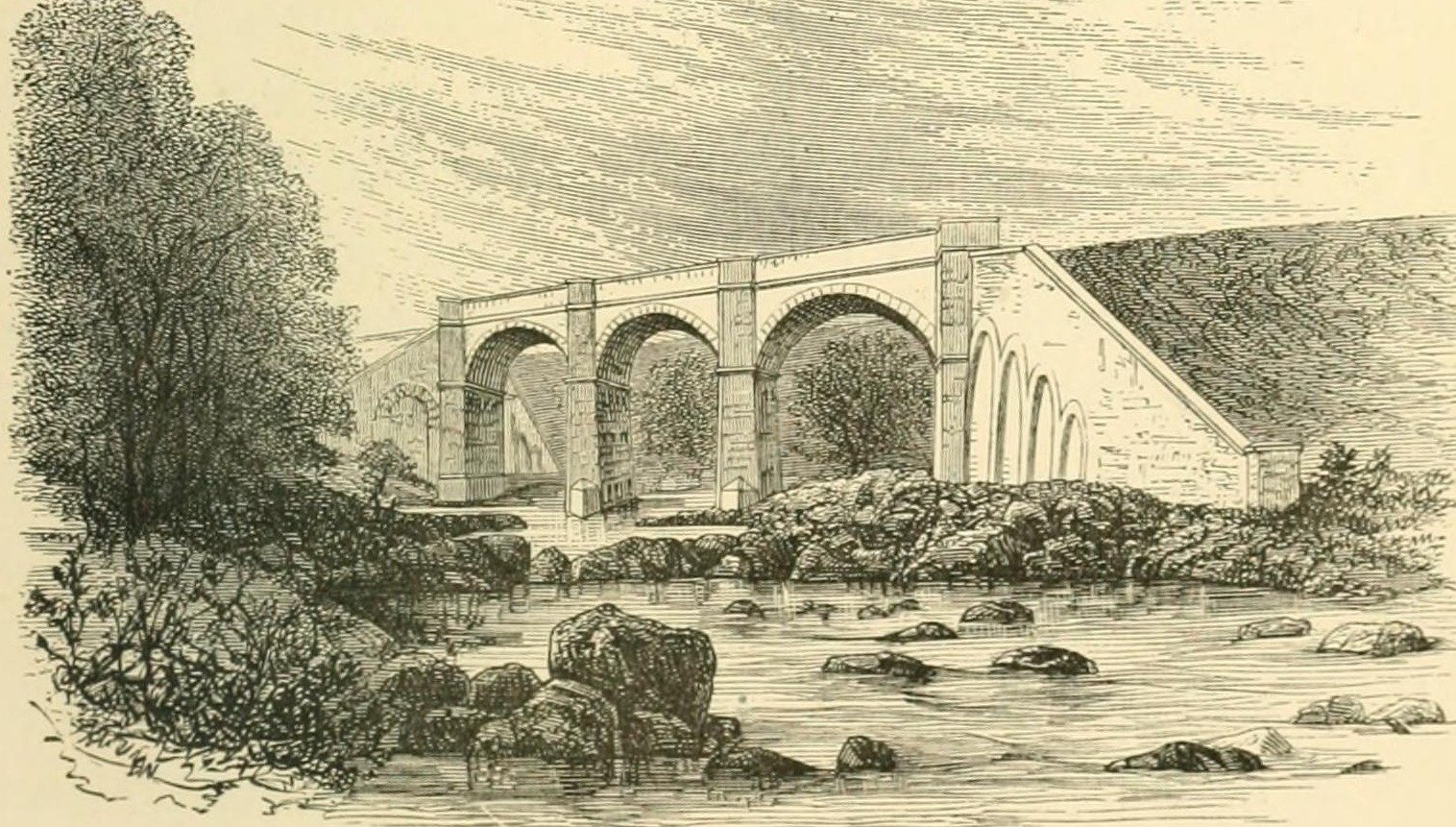
With children
In 1850 William Howson wrote about a hollow in a field near here. If you put your ear to it, you could hear a rumbling noise under the ground.
This story comes from William Howson, writing in 1850.
When you get there Find a quiet spot and put your ear close to the ground. What can you hear?
What the writers say
Speight read the tax roll of 1379. Stainforth paid 32 shillings, more than Bradford or Halifax. In 1850 Howson still called it an abode of wealth.
-
1086
“Stainforde three carucates.”
Domesday Book, the Conqueror's survey of 1086, in Speight's English. See the page
Source and note
Harry Speight, The Craven and North-West Yorkshire Highlands (London: Elliot Stock, 1892), page 73.
Whitaker (1805, p. 124) calls carucates 'plowlands': land measured for the tax called the geld. The scan breaks the line as 'I n Stainforde'; the quote starts after it.
-
1379 · 1892, from the tax rolls of 1379
“its 35 tax-payers, representing a population of probably nearly 200, are charged with a sum of 32s. Considering that such towns as Leeds paid only 60s. 4d., Bradford 23s., Halifax 12s. 8d., and Keighley 27s., the importance of Stainforth at that time is very apparent.”
Harry Speight, author of a guide and history of Craven. See the page
Source and note
Harry Speight, The Craven and North-West Yorkshire Highlands (London: Elliot Stock, 1892), page 132.
Speight adds that the lord of the manor paid 20s. of the 32s. himself.
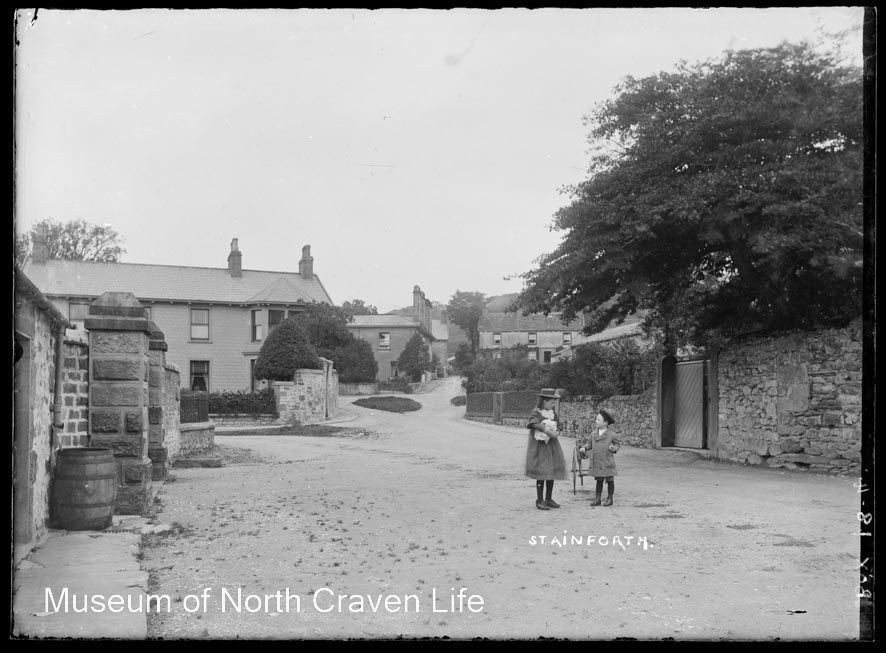
A girl with a doll and a boy with a cart, Stainforth, Horner Photographic Studio, about 1875 to about 1925, Victorian. The Horner Photographic Collection, Museum of North Craven Life (The Folly), Settle. CC BY 4.0. See the work -
1805
“The fortune of the Malhams was ruined by loyalty, and probably in part by its attendant good fellowship ; and Stainforth, among the rest, was sold soon after the Restoration.”
Thomas Dunham Whitaker, historian of Craven. See the page
Source
Thomas Dunham Whitaker, The History and Antiquities of the Deanery of Craven (London, 1805), page 133.
-
1850
“On the road between Little Stainforth and Stackhouse, in the comer of a field to the left, there is a slight hollow in the ground, on applying the ear to which a rambling noise is heard”
William Howson, writer of a Settle guide. See the page
Source and note
William Howson, An Illustrated Guide to the Curiosities of Craven (London and Settle, 1850), page 57.
The scan reads 'comer' for 'corner'. We corrected it. Howson says the place is called Robin Hood's Mill.
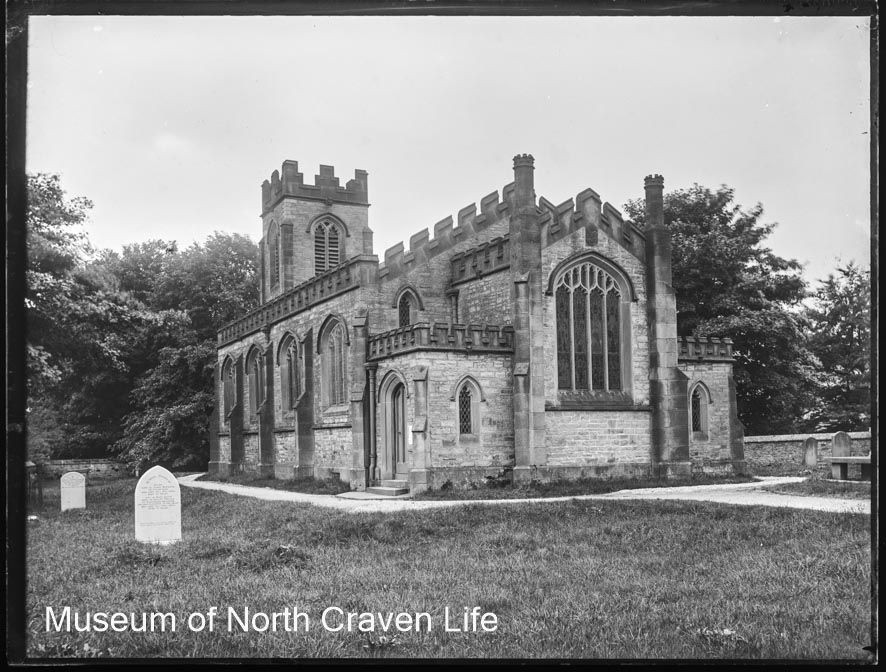
St Peter's church, Stainforth, Horner Photographic Studio, 1890 to 1920, Victorian. The Horner Photographic Collection, Museum of North Craven Life (The Folly), Settle. CC BY 4.0. See the work -
1850
“Stainforth, an abode of wealth and competence, is a pretty village, with a newly-erected small but handsome church.”
William Howson, writer of a Settle guide. See the page
Source
William Howson, An Illustrated Guide to the Curiosities of Craven (London and Settle, 1850), page 61.
-
1861
“pinfold the cuckoo and extinguish moonshine with water, with what conscience can you ask me to believe in your natural ebbing and flowing well?”
Settle Chronicle, a comic dialogue, the monthly Settle paper. See the page
Source and note
The Settle Chronicle and North Ribblesdale Advertiser, 1861 volume. Scans held by the Museum of North Craven Life, published by the North Craven Building Preservation Trust (CC BY-NC-SA 4.0), page 25.
A visitor mocks the local tales. Just before, the other speaker tells him that people in Stainforth tried to put the moonshine out with water.
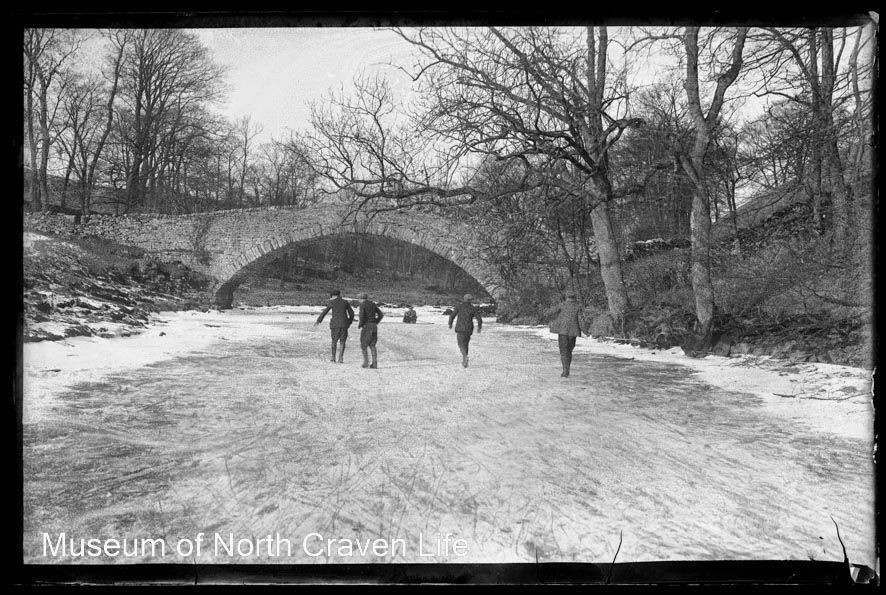
On the frozen Ribble at Stainforth Bridge, Horner Photographic Studio, about 1875 to about 1925, Victorian. The Horner Photographic Collection, Museum of North Craven Life (The Folly), Settle. CC BY 4.0. See the work