UK · England · North Yorkshire · Craven · In Hazlewood
Bolton Priory

With children
Monks once lived here. Now their priory is a ruin. In 1807 Dorothy Wordsworth wrote that the abbey stands in the most beautiful valley that was ever seen.
This story comes from Dorothy Wordsworth, writing in 1807, and William Wordsworth, writing in 1815.
When you get there Listen. In 1815 William Wordsworth wrote that the bells here rang loud with gladsome power.
What the writers say
Whitaker in 1805 put Bolton above every other ruined abbey in the North for its setting, though he thought Kirkstall the better ruin. Wordsworth first saw it in the summer of 1807 and opened The White Doe of Rylstone with its bells. Phillips in 1853 called it dear to painters.
-
1540 · about 1535 to 1543
“The forest from a mile beneth Gnarresburgh upward to very Bolton yn Craven is about a 20. miles yn lenght”
John Leland, the king's antiquary, travelling England. See the page
Source and note
The Itinerary of John Leland in or about the years 1535-1543, ed. Lucy Toulmin Smith, vol. 1 (London, 1907), part I, page 87.
Leland means the Forest of Knaresborough. Gnarresburgh is Knaresborough.
-
1805
“Bolton Priory stands upon a beautiful curvature of the Wharf, on a level sufficiently elevated to protect it from inundations, and low enough for every purpose of picturesque effect. In the latter respect it has no equal among the Northern houses, perhaps not in the kingdom.”
Thomas Dunham Whitaker, clergyman and historian of Craven. See the page
Source
Thomas Dunham Whitaker, The History and Antiquities of the Deanery of Craven (London, 1805), page 355.
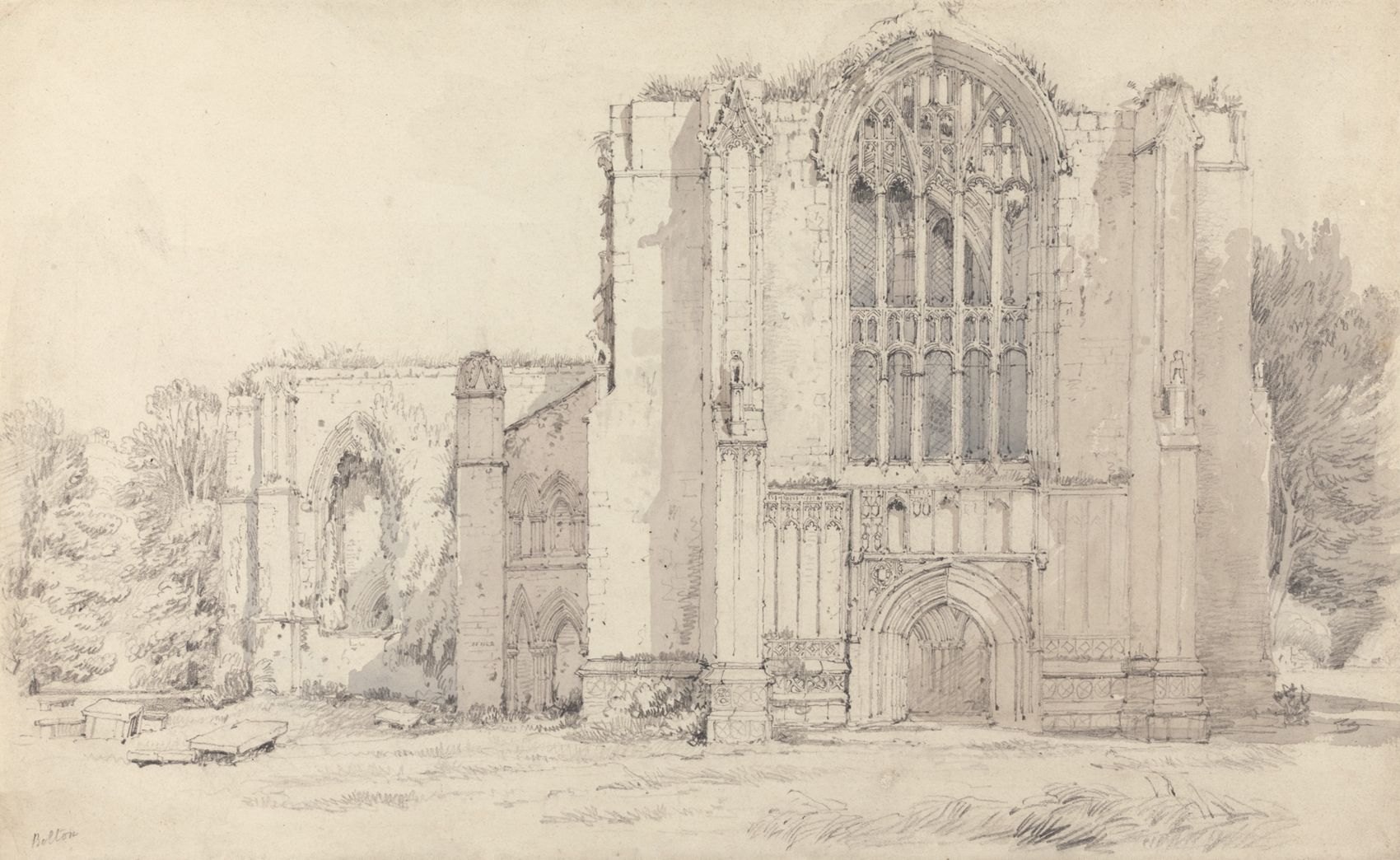
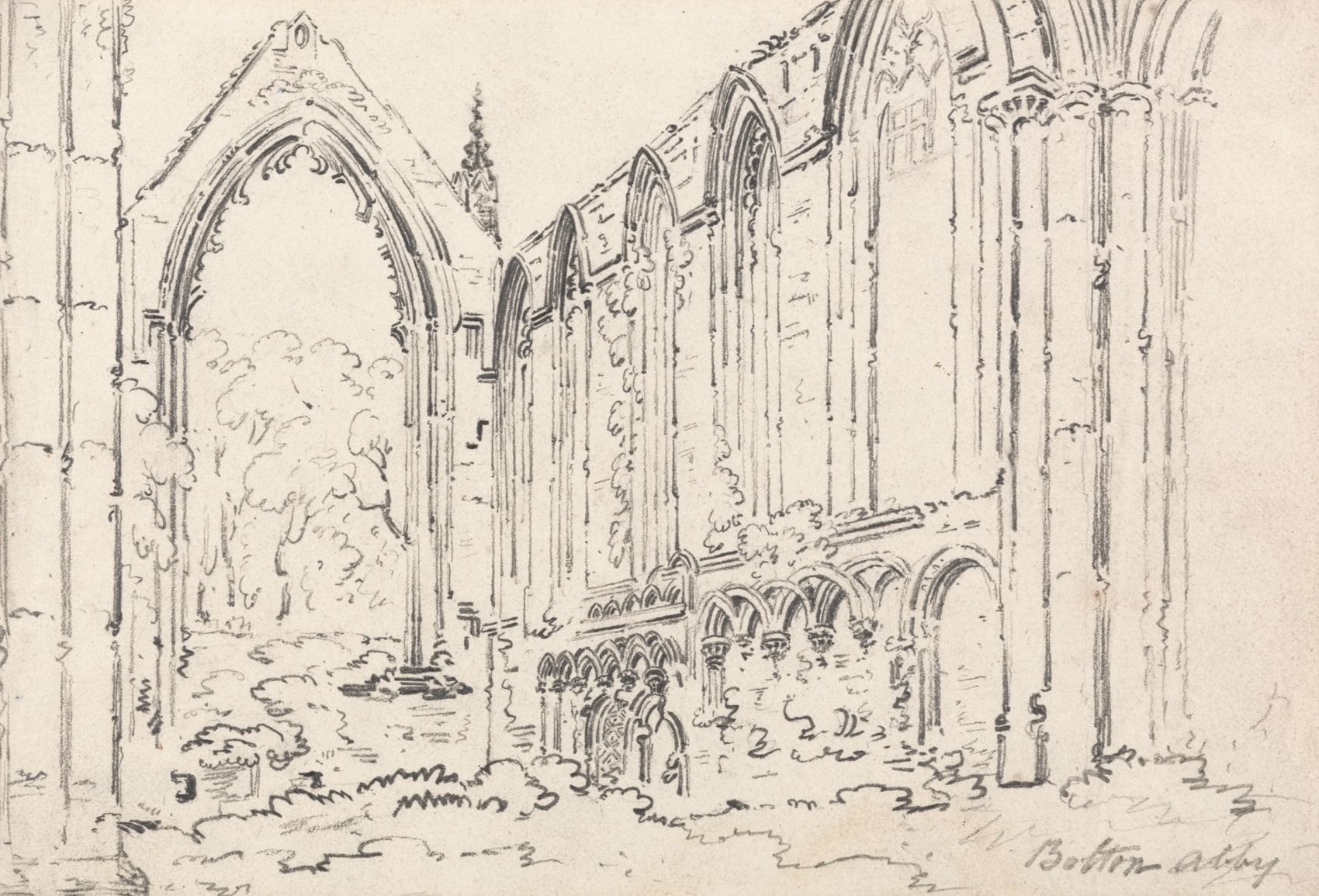
Bolton Abbey, Samuel Prout, undated. Yale Center for British Art. Public domain (CC0 1.0). See the work -
1805
“such are the enchantments of this place, that designing only a walk about the ruins of Bolton, I have been insensibly carried to the extent of its demesnes.”
Thomas Dunham Whitaker, clergyman and historian of Craven. See the page
Source
Thomas Dunham Whitaker, The History and Antiquities of the Deanery of Craven (London, 1805), page 356.
-
1805
“Kirkstall, as a mere ruin, is superior to Bolton ; but, though deficient neither in water nor wood, it wants the seclusion of a deep valley”
Thomas Dunham Whitaker, clergyman and historian of Craven. See the page
Source
Thomas Dunham Whitaker, The History and Antiquities of the Deanery of Craven (London, 1805), page 355.
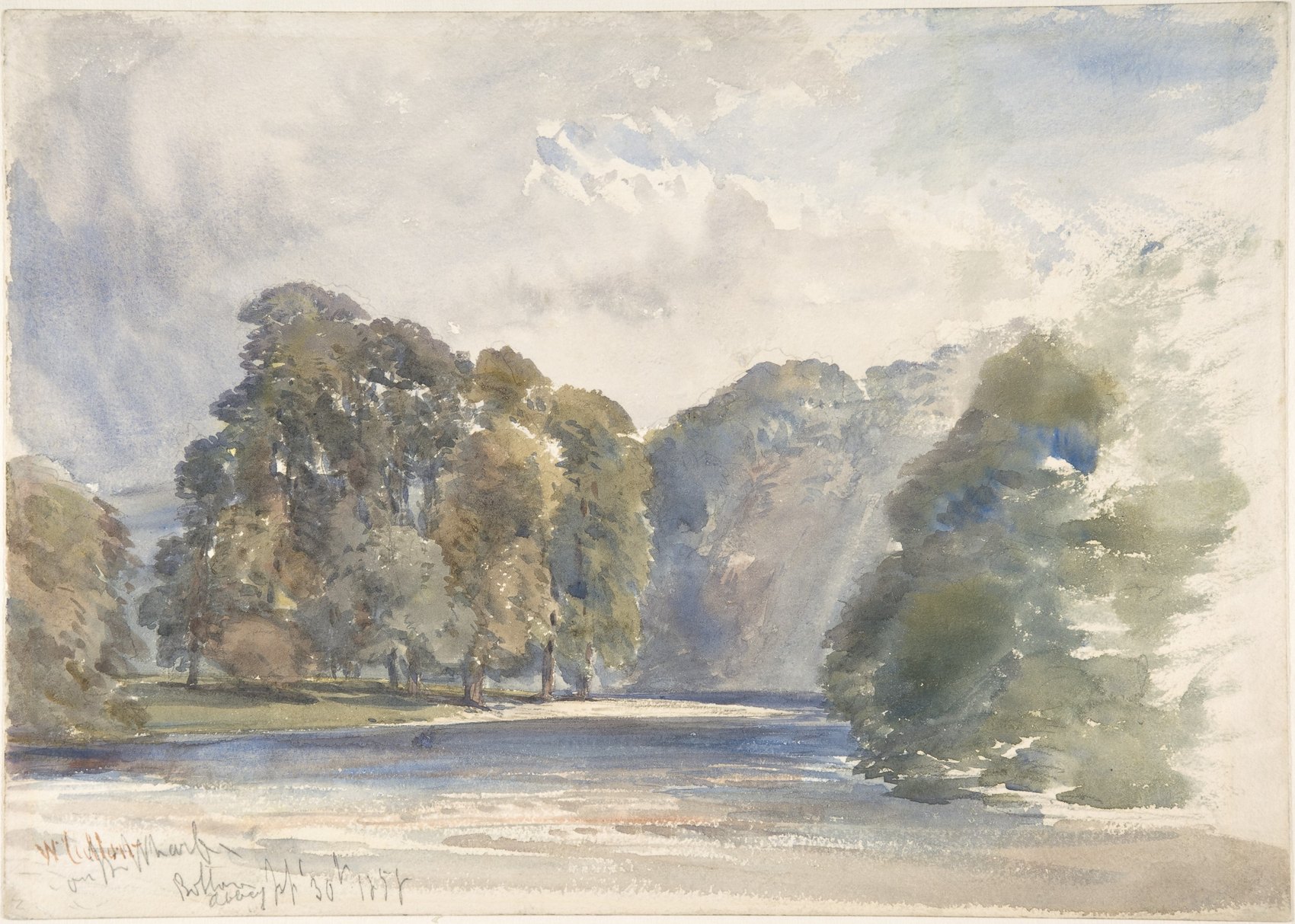
On the Wharfe, Bolton Abbey, William Callow, September 30, 1858. The Metropolitan Museum of Art. Public domain (CC0 1.0). See the work -
1805
“From Bolton to Barden, a tract of three miles, the scene is unequalled in richness and beauty.”
Thomas Dunham Whitaker, clergyman and historian of Craven. See the page
Source
Thomas Dunham Whitaker, The History and Antiquities of the Deanery of Craven (London, 1805), page 198.
-
1807 · July 1807
“The abbey stands in the most beautiful valley that ever ... was seen ; the ruin is greatly inferior to Kirkstall ; but the situation infinitely more beautiful — a retired woody winding valley, with steep banks and rocky scars, no manufactories, no horrible forges”
Dorothy Wordsworth, writer and diarist, walking home to Grasmere, in a letter to Mrs Clarkson. See the page
Source and note
William Knight (ed.), Letters of the Wordsworth Family from 1787 to 1855, vol. 1 (Boston: Ginn, 1907), page 312.
The letter has no year. Knight, her editor, says she must have written it in 1807.
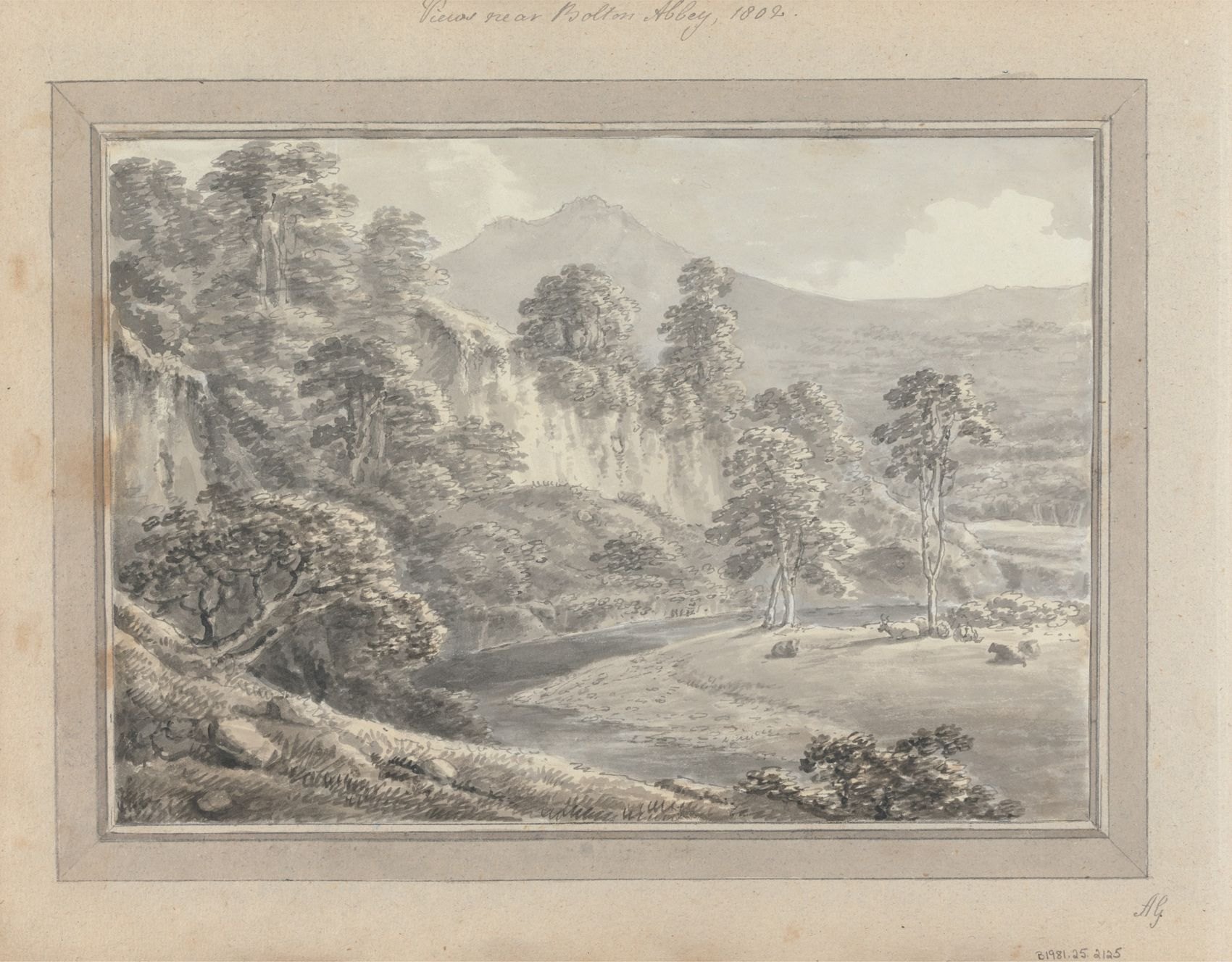
Views in England, Scotland and Wale: View near Bolton Abbey, Amos Green, 1802. Yale Center for British Art. Public domain (CC0 1.0). See the work -
1815
“During the summer of 1807, the Author visited, for the first time, the beautiful Scenery that surrounds Bolton Priory, in Yorkshire”
William Wordsworth, poet. See the page
Source
William Wordsworth, The White Doe of Rylstone; or, The Fate of the Nortons (London: Longman, 1815), Advertisement.
-
1815 · 1807, printed 1815
“From Bolton's old monastic tower The bells ring loud with gladsome power”
William Wordsworth, poet, who first saw Bolton in the summer of 1807. See the page
Source and note
William Wordsworth, The White Doe of Rylstone; or, The Fate of the Nortons (London: Longman, 1815), page 3.
We checked this against the Wikisource transcription of the 1815 edition, because the archive.org scan misreads the opening capital.
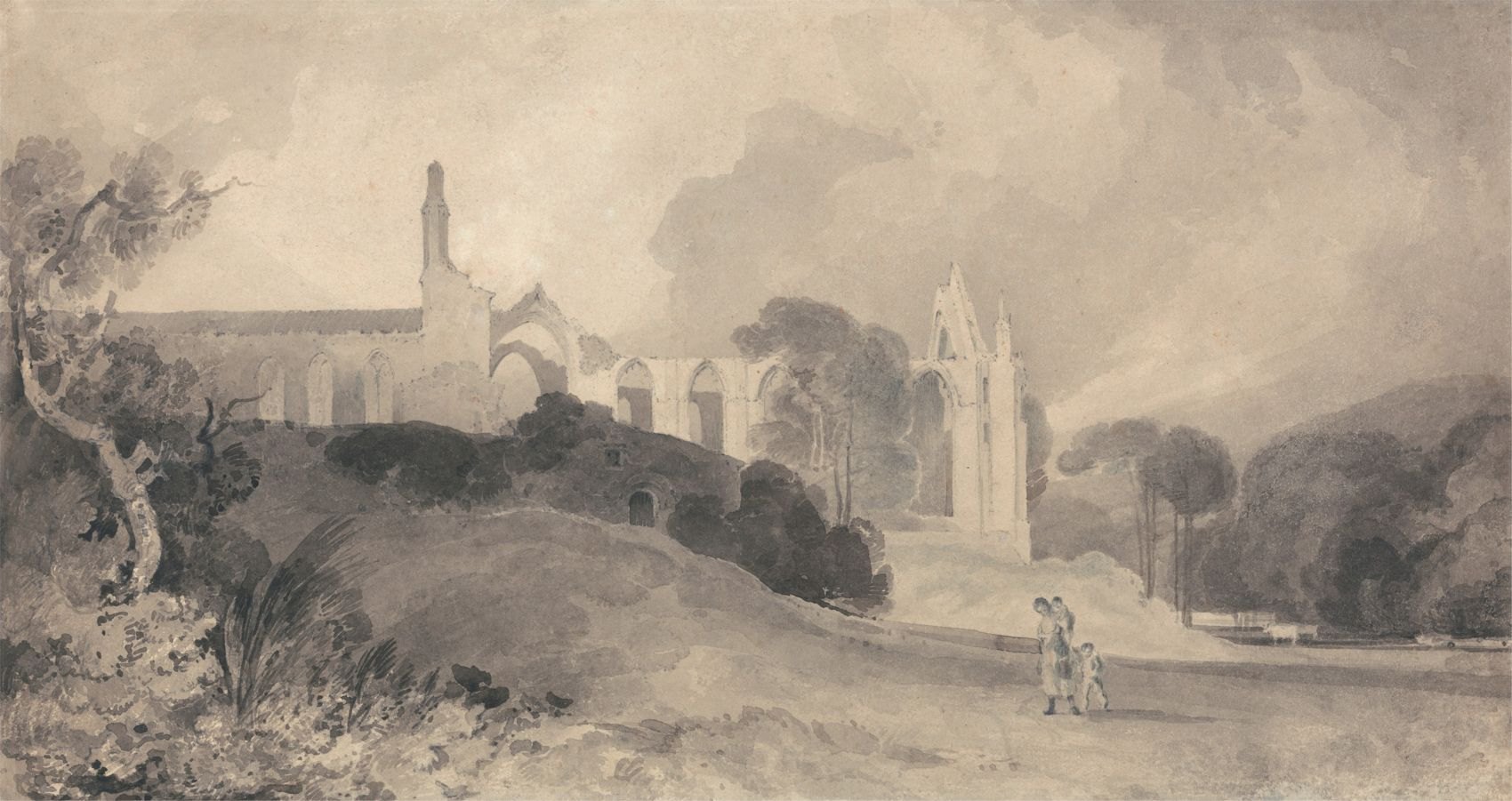
Bolton Priory, Yorkshire, John Sell Cotman, ca. 1803. Yale Center for British Art. Public domain (CC0 1.0). See the work -
1836 · October 1836
“Spirits of wonder, loveliness, and fear, Dwell in these groves, beneath o'er-arching trees”
Ebenezer Elliott, the Corn-Law Rhymer, Sheffield poet, in a sonnet on Bolton Abbey. See the page
Source and note
The New Monthly Magazine, vol. 48, October 1836, 'The Corn-Law Rhymer's Pilgrimage', page 151.
The magazine prints the series under the name the Corn-Law Rhymer, which was Ebenezer Elliott's.
-
1853
“the Wharfe emerges into that sweet and picturesque combination of cliff, meadow, forest, and monastic ruins, which has rendered Bolton Abbey dear to the painter of nature”
John Phillips, geologist, Professor of Geology at Oxford. See the page
Source
John Phillips, The Rivers, Mountains, and Sea-Coast of Yorkshire (London, 1853), page 80.
Bolton Abbey, Yorkshire, Thomas Girtin, ca. 1801. Yale Center for British Art. Public domain (CC0 1.0). See the work -
1864
“a series of Views of Bolton Abbey and neighbourhood, by Mr Pumphrey, of York. New Views constantly being added.”
Settle Chronicle, the monthly Settle paper. See the page
Source and note
The Settle Chronicle and North Ribblesdale Advertiser, 1864 volume. Scans held by the Museum of North Craven Life, published by the North Craven Building Preservation Trust (CC BY-NC-SA 4.0), page 47.
From an advertisement for photographs that Wildman and Son of Settle sold.
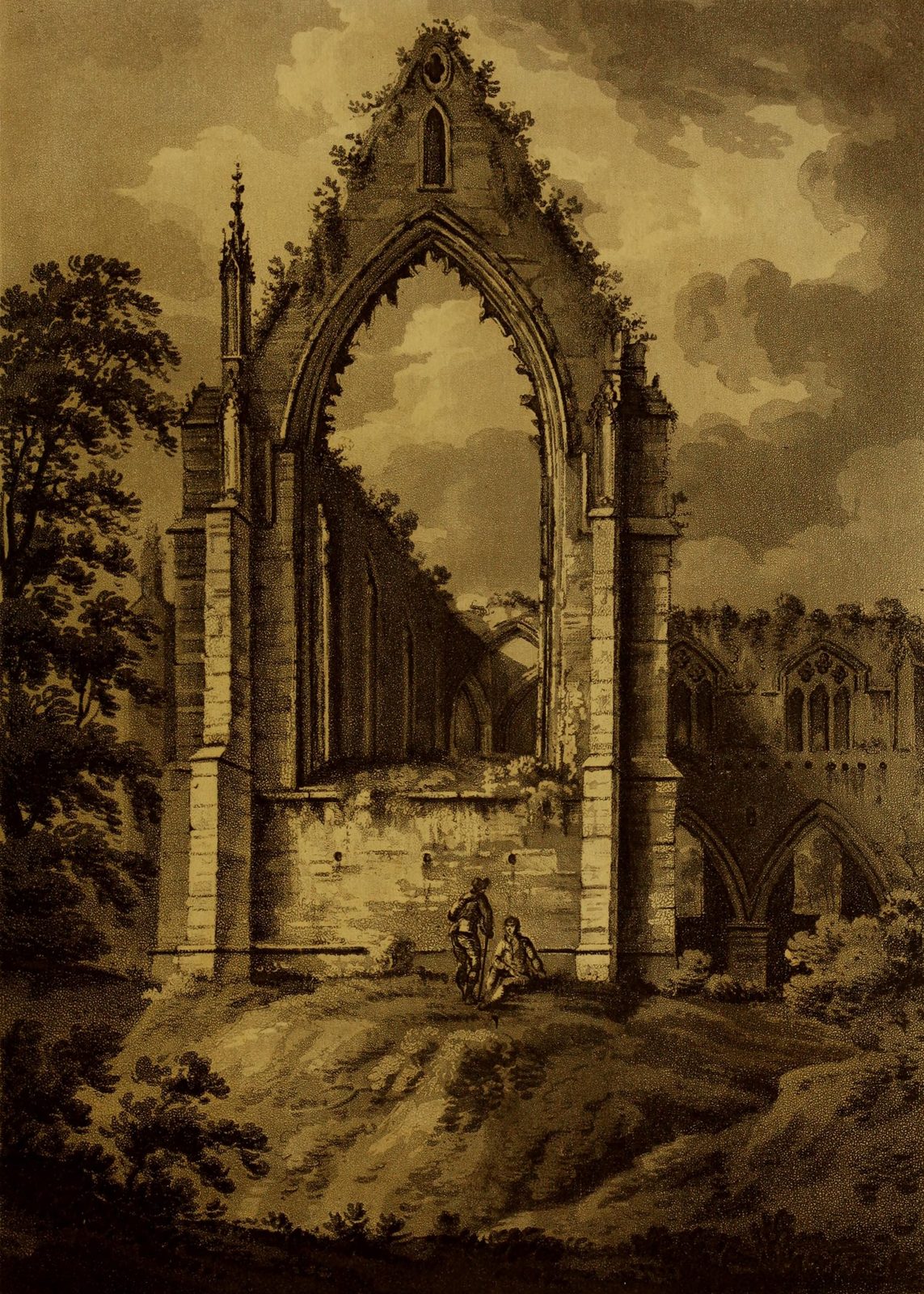
The East end of Bolton Abbey, The Rev. J. Griffith (drawing); S. Alken (aquatint). From Thomas Dunham Whitaker, The History and Antiquities of the Deanery of Craven (London, 1805). See the page 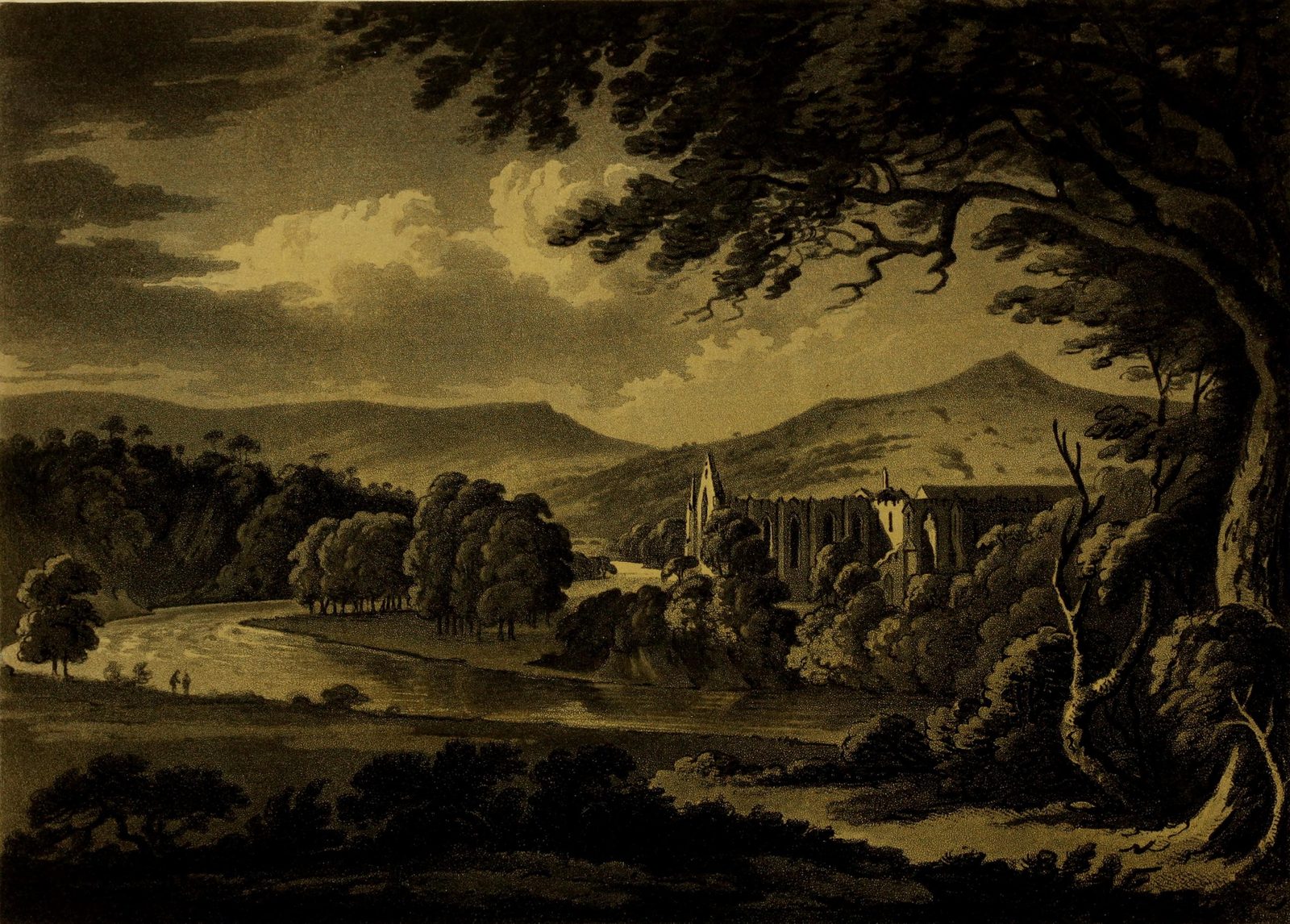
N. view of Bolton Abbey, The Rev. J. Griffith (drawing); S. Alken (aquatint). From Thomas Dunham Whitaker, The History and Antiquities of the Deanery of Craven (London, 1805). See the page 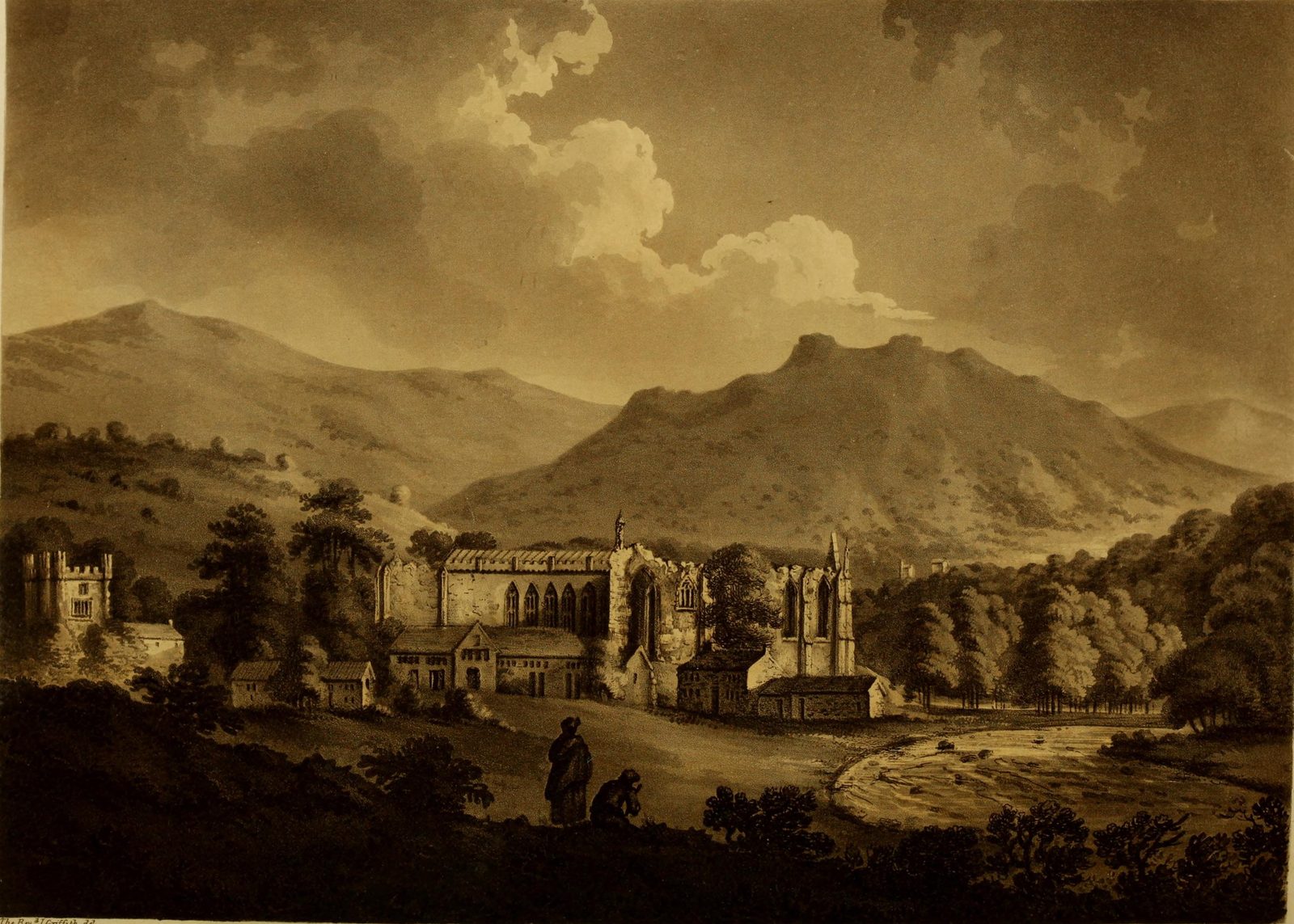
S. view of Bolton Abbey, The Rev. J. Griffith (drawing); S. Alken (aquatint). From Thomas Dunham Whitaker, The History and Antiquities of the Deanery of Craven (London, 1805). See the page 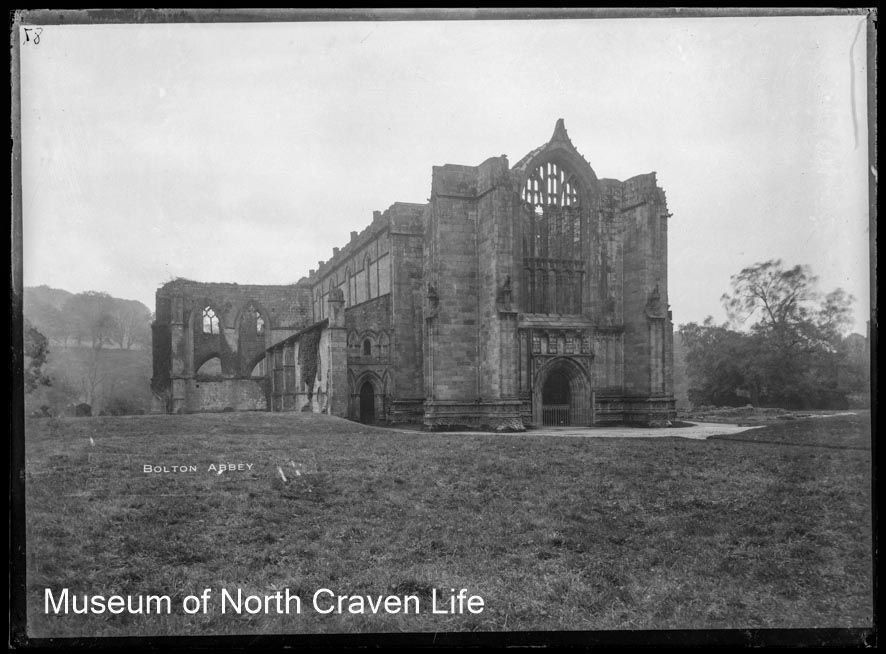
The west front of Bolton Priory, Horner Photographic Studio, about 1875 to about 1925, Victorian. The Horner Photographic Collection, Museum of North Craven Life (The Folly), Settle. CC BY 4.0. See the work


Visit
From the guide. Nobody pays to be here.
The Devonshire Arms, Bolton Abbey
The Devonshire Arms is a country hotel at Bolton Bridge, on the Bolton Abbey estate.
“At Bolton Bridge, the Devonshire Arms.”
William Howson, 1850. See the page
Bolton Priory, Bolton Abbey estate
Bolton Priory is a ruined Augustinian priory, and its nave is still a church.


