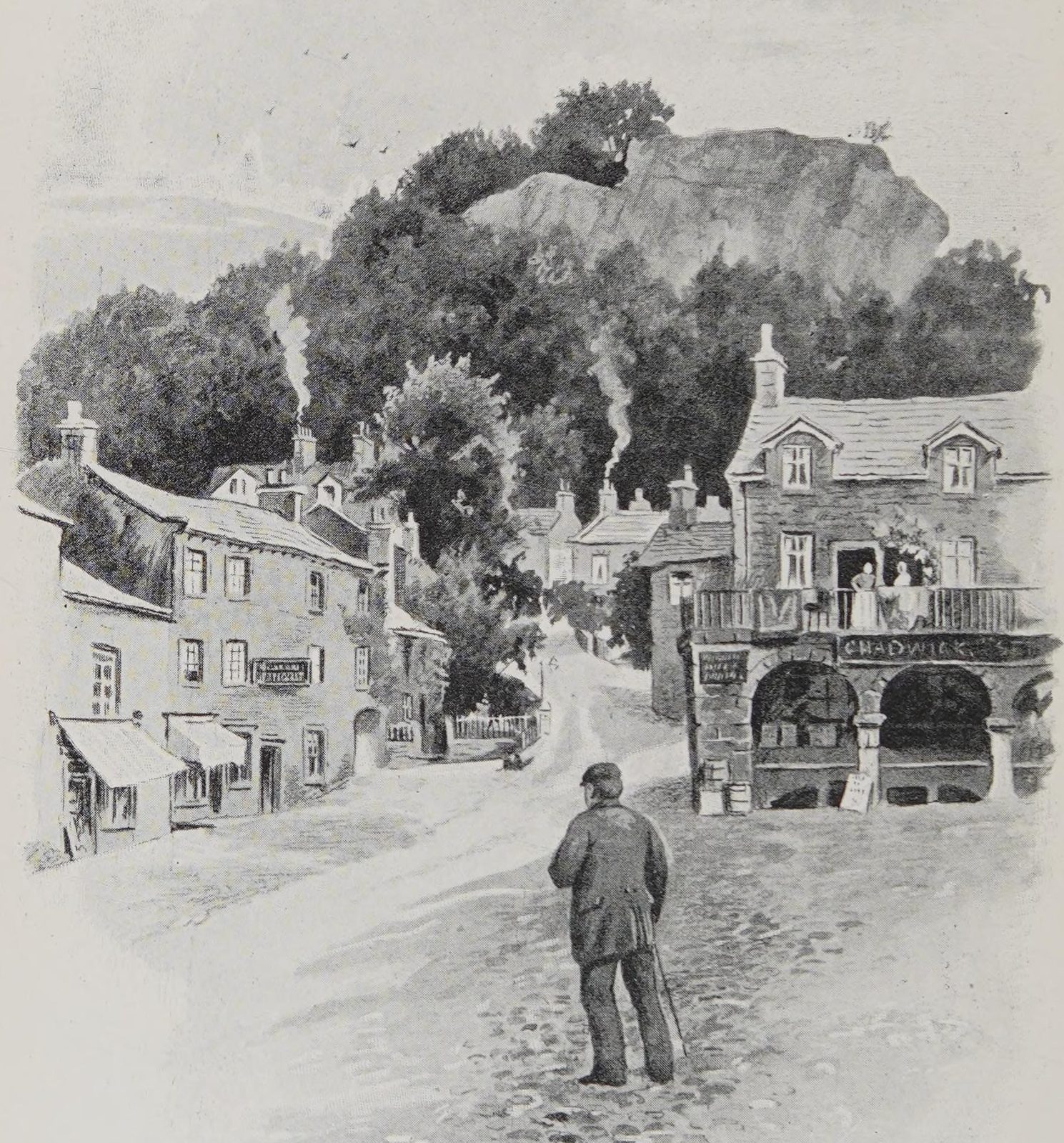
UK · England · North Yorkshire · Craven · In Langcliffe
Victoria Cave
With children
In 1838 Joseph Jackson was out walking with his dog. The dog chased a rabbit and vanished into a small gap in the rock. Jackson found a cave. He had to lie flat to get in. Inside, the roof was hung with stalactites as white as snow. Later, diggers found the bones of hyenas and a cave tiger.
This story comes from Harry Speight, writing in 1892, the Settle Chronicle, reporting a lecture, in 1863, and Joseph Jackson, writing in 1838.
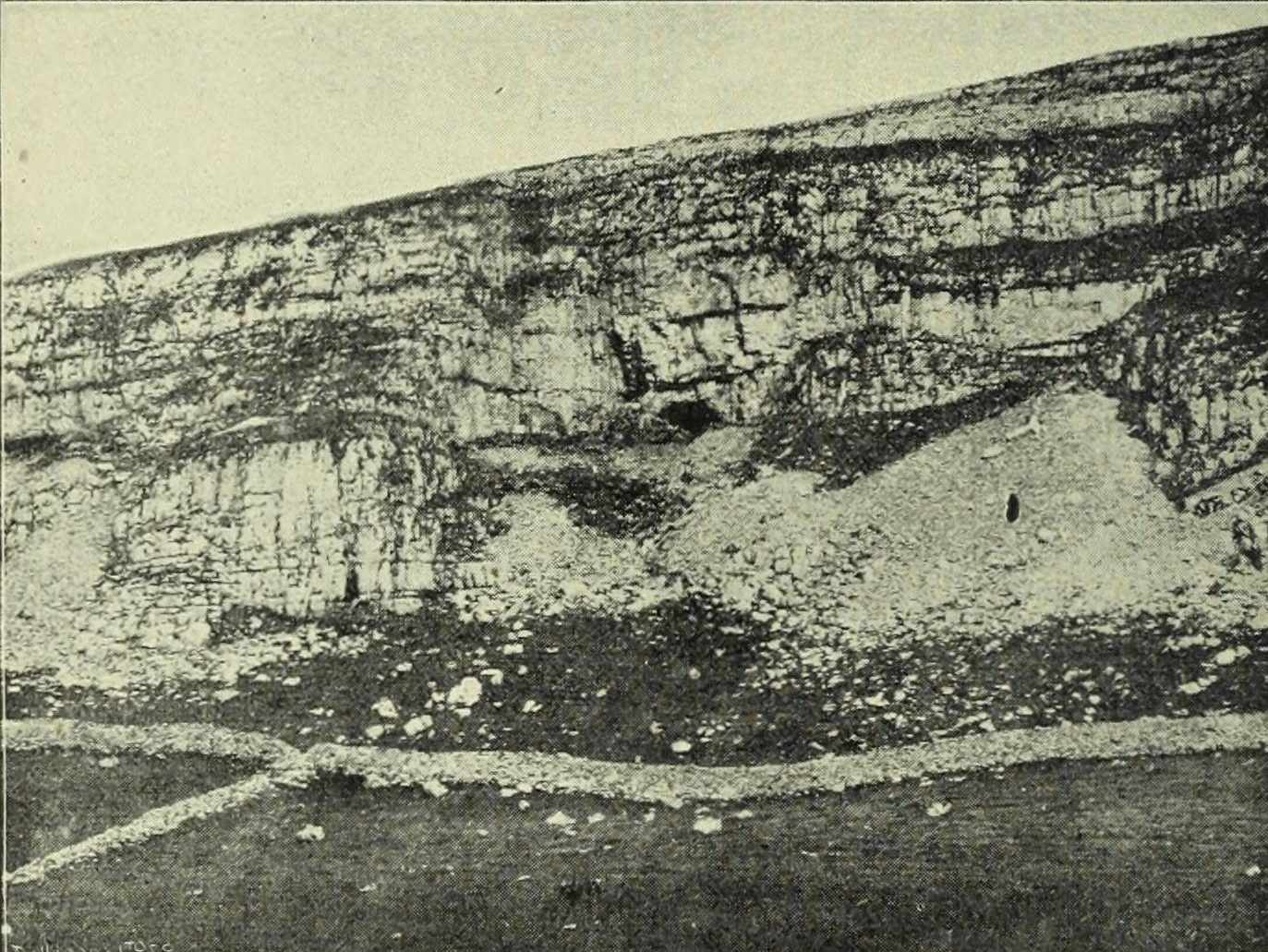
When you get there Look at the mouth of the cave. Could a dog squeeze in there?
Answer a question to collect the stamp · Stop 2 on Victoria Cave and Attermire
What the writers say
Joseph Jackson lay flat to squeeze in, in 1838, and found a roof of white stalactites. Later digs turned up brooches, pottery and bones, and Darwin was among the scientists who helped. The writers disagree: Dawkins says the find was on coronation day, Speight says only coronation year, and Speight says Professor Busk later judged that the 'human' bone Dawkins wrote about may be an animal's.
-
1838 · 1838 (printed 1844)
“I was obliged to lie down at full length to get in.”
Joseph Jackson, the Settle man who found the cave. See the page
Source and note
W. Boyd Dawkins, Cave Hunting: Researches on the Evidence of Caves Respecting the Early Inhabitants of Europe (London: Macmillan, 1874), page 84.
Dawkins takes Jackson's account from Roach Smith's Collectanea Antiqua, vol. I (1844).
-
1838 · 1838 (printed 1844)
“The roof of the cave was beautifully hung with stalactites in various fantastic forms and as white as snow.”
Joseph Jackson, the Settle man who found the cave. See the page
Source
W. Boyd Dawkins, Cave Hunting: Researches on the Evidence of Caves Respecting the Early Inhabitants of Europe (London: Macmillan, 1874), page 84.
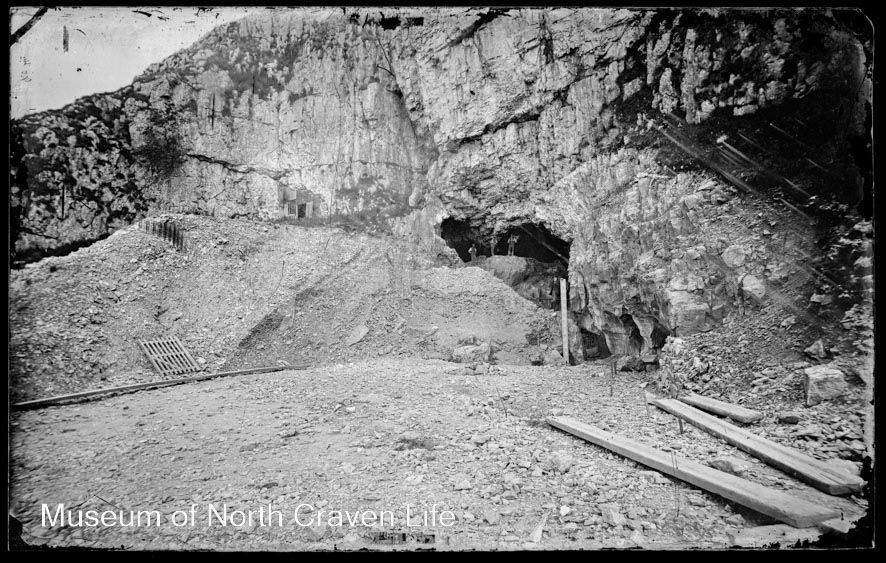
Digging at Victoria Cave, Horner Photographic Studio, 1872. The Horner Photographic Collection, Museum of North Craven Life (The Folly), Settle. CC BY 4.0. See the work -
1850
“The Cave when first discovered was rich in spar and stalactites, but, as usual, they were broken, destroyed, or carried off.”
William Howson, writer of a Settle guide. See the page
Source
William Howson, An Illustrated Guide to the Curiosities of Craven (London and Settle, 1850), page 60.
-
1855
“They consist of broken pieces of antique pottery with raised figures upon them. On one was the head of a wolf, another an eagle”
Settle Chronicle, the monthly Settle paper. See the page
Source and note
The Settle Chronicle and North Ribblesdale Advertiser, 1855 volume. Scans held by the Museum of North Craven Life, published by the North Craven Building Preservation Trust (CC BY-NC-SA 4.0), page 20.
The paper's writer saw finds that Joseph Jackson of Settle made.
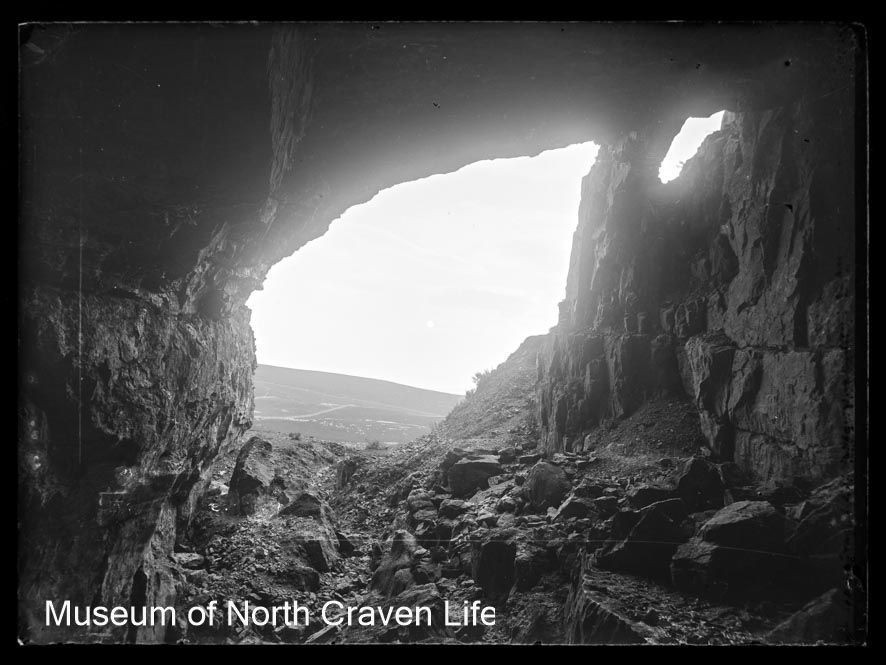
Looking out from Victoria Cave, Horner Photographic Studio, 1890 to 1920, Victorian. The Horner Photographic Collection, Museum of North Craven Life (The Folly), Settle. CC BY 4.0. See the work -
1863
“A dog, which after following a rabbit into the rock through a chink, had crept out through these stones, first excited suspicion and caused their removal.”
Settle Chronicle, reporting a lecture, the monthly Settle paper. See the page
Source and note
The Settle Chronicle and North Ribblesdale Advertiser, 1863 volume. Scans held by the Museum of North Craven Life, published by the North Craven Building Preservation Trust (CC BY-NC-SA 4.0), page 3.
The lecturer says Joseph Jackson of Settle found the cave in 1837.
-
1863
“a few remains were found of the cave-tiger and hyena”
Settle Chronicle, reporting a lecture, the monthly Settle paper. See the page
Source
The Settle Chronicle and North Ribblesdale Advertiser, 1863 volume. Scans held by the Museum of North Craven Life, published by the North Craven Building Preservation Trust (CC BY-NC-SA 4.0), page 3.
-
1874 · 17 July 1874
“Many persons in Bradford will recollect the visits paid to the Victoria Cave, Settle, during the last meeting of the British Association, and the animated discussions which arose upon various features of difficult interpretation”
Bradford Observer, a newspaper, in the British Newspaper Archive's free search extract. See the page
Source
Bradford Observer, 17 July 1874, page 3; the words come from the free extract the British Newspaper Archive's search shows, page 3.
-
1874
“some brooches of singular taste and beauty, with implements of bone, and large quantities of broken bones and fragments of pottery”
W. Boyd Dawkins, geologist who identified the cave's finds for its excavation committee. See the page
Source
W. Boyd Dawkins, Cave Hunting: Researches on the Evidence of Caves Respecting the Early Inhabitants of Europe (London: Macmillan, 1874), page 83.
-
1874
“The most important historic cave in this country is that discovered by Mr. Joseph Jackson, near Settle, in Yorkshire, on the coronation day of Queen Victoria, in 1838”
W. Boyd Dawkins, geologist who identified the cave's finds for its excavation committee. See the page
Source
W. Boyd Dawkins, Cave Hunting: Researches on the Evidence of Caves Respecting the Early Inhabitants of Europe (London: Macmillan, 1874), page 81.
-
1874
“They were aided by the assistance of Sir C. Lyell, Sir. J. Lubbock, and Mr. Darwin, Professor Phillips”
W. Boyd Dawkins, geologist who identified the cave's finds for its excavation committee. See the page
Source
W. Boyd Dawkins, Cave Hunting: Researches on the Evidence of Caves Respecting the Early Inhabitants of Europe (London: Macmillan, 1874), page 85.
-
1874
“the small fragment of human bone found by the Settle Cave Exploration Committee in the former cave in 1872 establishes the fact that man lived in Yorkshire before the glacial period.”
W. Boyd Dawkins, geologist who identified the cave's finds for its excavation committee. See the page
Source and note
W. Boyd Dawkins, Cave Hunting: Researches on the Evidence of Caves Respecting the Early Inhabitants of Europe (London: Macmillan, 1874), page 411.
Dawkins puts an 'if' before this. Speight (1892, pp. 122-123) says Professor Busk first called the bone human, and later concluded it may come from an animal.
-
1892
“Mr. Jackson was out walking with his dog, when the animal was seen to disappear through a small opening in the rock”
Harry Speight, author of a guide and history of Craven. See the page
Source
Harry Speight, The Craven and North-West Yorkshire Highlands (London: Elliot Stock, 1892), page 119.
-
1892
“Yorkshiremen would have to cede the idea of tracing their pedigree back to that pre-glacial marrow-bone”
Harry Speight, author of a guide and history of Craven. See the page
Source and note
Harry Speight, The Craven and North-West Yorkshire Highlands (London: Elliot Stock, 1892), page 123.
Speight reports a joke Boyd Dawkins made at the British Association's Belfast meeting in 1878. By then Professor Busk had decided the 'human' bone may be an animal's.
-
1892
“The discovery was made by Mr. Joseph Jackson, of Settle, in the year (not the day as is often stated) of Her Majesty's Coronation, whence the name of the cave.”
Harry Speight, author of a guide and history of Craven. See the page
Source and note
Harry Speight, The Craven and North-West Yorkshire Highlands (London: Elliot Stock, 1892), page 119.
Speight and Dawkins disagree: Dawkins (1874) says coronation day.