UK · England · North Yorkshire · Craven · In Settle
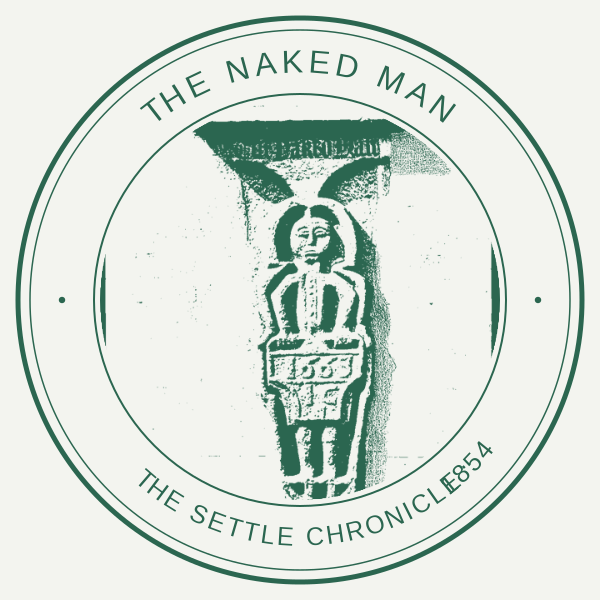
The Naked Man

-
1854
“We have just learned that a Shangae pullet belonging to Mr. Cork, of the Naked Man Inn, has layed 39 days consecutively, omitting one.”
Settle Chronicle, the monthly Settle paper. See the page
Source and note
The Settle Chronicle and North Ribblesdale Advertiser, 1854 volume. Scans held by the Museum of North Craven Life, published by the North Craven Building Preservation Trust (CC BY-NC-SA 4.0), page 12.
The same report calls the Shangaes "a new variety imported within the last few years".
-
1892
“About the Market Place are several very old inns, one of which exhibits a stone figure of a naked man or boy, holding a shield inscribed I C 1663.”
Harry Speight, author of a guide and history of Craven. See the page
Source and note
Harry Speight, The Craven and North-West Yorkshire Highlands (London: Elliot Stock, 1892), page 87.
Read in the Google scan of the 1892 edition. The other archive.org scan of the same book misreads the date as 1GG3.
-
1892
“there can be no doubt they originated as a satire upon the whims of our ancestors in the matter of dress. ... At Moorfields, in Middlesex, a tailor's sign portrayed a naked boy, with the couplet : "So fickle is our English nation, I would be clothed if I knew the fashion."”
Harry Speight, author of a guide and history of Craven. See the page
Source and note
Harry Speight, The Craven and North-West Yorkshire Highlands (London: Elliot Stock, 1892), page 87.
"They" are inn signs of the Naked Man, Boy and Woman. This is Speight's explanation of the sign, not a record of why the Settle figure was carved.