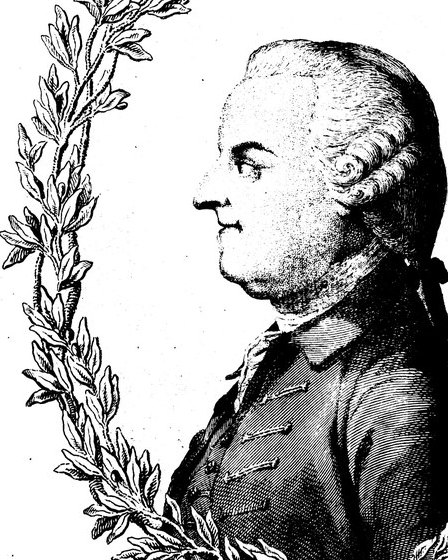
In their own words
“I stay'd there (not without shuddering) a quarter of an hour, and thought my trouble richly paid”
The Letters of Thomas Gray, ed. Duncan C. Tovey, vol. III (London: G. Bell and Sons, 1912), Gray's journal of his tour. See the page
Who they were
Gray was born in his father's house in Cornhill, London, on 26 December 1716.
From Dictionary of National Biography, vol. 23, 'Gray, Thomas (1716-1771)', by Leslie Stephen: “was born in his father's house in Cornhill, London, 26 Dec. 1716” See the page
His mother had twelve children, and only Thomas lived past infancy.
From Dictionary of National Biography, vol. 23, 'Gray, Thomas (1716-1771)', by Leslie Stephen: “She had borne twelve children, all of whom, except Thomas, the fifth, died in infancy.” See the page
In 1739 he set out with his school friend Horace Walpole on the grand tour.
From Dictionary of National Biography, vol. 23, 'Gray, Thomas (1716-1771)', by Leslie Stephen: “invited Gray to accompany him on the grand tour. They crossed from Dover 29 March 1739” See the page
His Elegy came out on 16 February 1751, and ran to four editions in two months.
From Dictionary of National Biography, vol. 23, 'Gray, Thomas (1716-1771)', by Leslie Stephen: “he was about to publish the ‘Elegy.’ ... it appeared accordingly on 16 Feb. 1751. It went through four editions in two months” See the page
He refused, on principle, to take money for his poems.
From Dictionary of National Biography, vol. 23, 'Gray, Thomas (1716-1771)', by Leslie Stephen: “declining on principle to accept payment for his poems” See the page
Students at Peterhouse raised a false alarm of fire, and Gray climbed down his rope ladder into their tub of water.
From Dictionary of National Biography, vol. 23, 'Gray, Thomas (1716-1771)', by Leslie Stephen: “Some noisy young gentlemen at Peterhouse placed a tub of water under his windows and raised an alarm of fire. Gray descended his ladder and found himself in the tub.” See the page
In 1757 he turned down the post of poet laureate.
From Dictionary of National Biography, vol. 23, 'Gray, Thomas (1716-1771)', by Leslie Stephen: “offer the laureateship, vacated by Cibber's death, to Gray. Gray, however, at once declined it” See the page
In July 1768 the Duke of Grafton made him professor of history and modern languages at Cambridge.
From Dictionary of National Biography, vol. 23, 'Gray, Thomas (1716-1771)', by Leslie Stephen: “the professorship of history and modern languages at Cambridge ... Gray was immediately appointed to the vacant post by the Duke of Grafton, his warrant being signed 28 July” See the page
His friend W. J. Temple called him perhaps the most learned man in Europe.
From Dictionary of National Biography, vol. 23, 'Gray, Thomas (1716-1771)', by Leslie Stephen: “Temple says that Gray was perhaps ‘the most learned man in Europe.’” See the page
He died on 30 July 1771, and lies with his mother at Stoke Poges.
From Dictionary of National Biography, vol. 23, 'Gray, Thomas (1716-1771)', by Leslie Stephen: “He died 30 July 1771 ... He was buried at Stoke Poges on 6 Aug., in the same vault with his mother.” See the page
In Craven
In 1769 he toured the Lakes and kept a journal, which William Mason later printed in full.
From Dictionary of National Biography, vol. 23, 'Gray, Thomas (1716-1771)', by Leslie Stephen: “In 1769 he paid a visit to the Lakes. His journal was fully published by Mason” See the page
Riding east from Lancaster, he saw Ingleborough wrapped in cloud.
From The Letters of Thomas Gray, ed. Duncan C. Tovey, vol. III (London: G. Bell and Sons, 1912), Gray's journal of his tour, page 260: “Ingleborough, which I had seen before distinctly at Lancaster, to N:E: was now compleatly wrapt in clouds” See the page
At Settle he liked his small inn, and stayed two nights.
From The Letters of Thomas Gray, ed. Duncan C. Tovey, vol. III (London: G. Bell and Sons, 1912), Gray's journal of his tour, page 261: “my Inn pleased me much (tho' small) for the neatness and civility of the good woman that kept it, so I lay there two nights” See the page
On 13 October he went round by chaise to Gordale Scar, a trip of thirteen miles.
From The Letters of Thomas Gray, ed. Duncan C. Tovey, vol. III (London: G. Bell and Sons, 1912), Gray's journal of his tour, page 261: “Oct. 13, to visit Gordale-scar ... so I went round in a chaise ... wch made it full thirteen miles” See the page
On 14 October he went on to Skipton.
From The Letters of Thomas Gray, ed. Duncan C. Tovey, vol. III (London: G. Bell and Sons, 1912), Gray's journal of his tour, page 262: “Oct: 14 Went to Skipton 16 miles” See the page
The journey
A tour of the Lakes and Craven, autumn 1769. 29 September to 22 October 1769.
Craven is stops 20 to 27 of 42, between Hornby and Rombalds Moor. Light dots are stops inside Craven. Each stop is a place the writer names, and their words are listed under the maps. Straight lines join the stops. We do not know every road they took.
“I now am projecting to strike across the hills ... by Settle, and so get to Mason's” See the page
The stretch in Craven
How we know each stop: all 42, in the writer's own words
1. Old Park · 26 August 1769
“Old Park, Saturday, August 26, 1769.”, page 230. See the page
Gray heads this letter to Mason from Old Park, Dr Wharton's house, where the tour began. Lewis's Topographical Dictionary (1831) puts the township of Old-Park 3¾ miles north-east of Bishop Auckland. OpenStreetMap has no Old Park there, so the dot is at Old Park Terrace in Byers Green, close by.
2. Brough · 29 September 1769
“I set out on the 29th September, with poor Doctor Wharton, and lay at Brough”, page 232. See the page
From Gray's letter to James Brown, Lancaster, 10 October 1769. Wharton fell ill that night and went home.
3. Appleby · 30 September 1769
“On the ascent of the hill above Appleby the thick hanging wood & the long reaches of the Eden”, page 233. See the page
4. Penrith · 30 September 1769
“at 3 o'clock dined with Mrs Buchanan, at Penrith, on trout & partridge”, page 233. See the page
5. Watermillock · 1 October 1769
“Went to see Ulz-water 5 miles distant ... along its borders beyond a village scatter'd among trees & call'd Water-malloch”, page 235. See the page
Gray writes Ulz-water for Ullswater and Water-malloch for Watermillock.
6. Keswick · 2 October 1769
“set out at 10 for Keswick ... Dined by two o'clock at the Queen's Head”, page 236. See the page
7. Grange, Borrowdale · 3 October 1769
“For me I went no farther than the Farmer's (better than 4 m: from Keswick) at Grange”, page 240. See the page
8. Castlerigg Stone Circle · 5 October 1769
“After dinner walked up the Penrith-road 2 miles or more ... saw a Druid-Circle”, page 245. See the page
9. Portinscale · 5 October 1769
“then I took my way through Portingskall village to the Park”, page 245. See the page
Gray spells it Portingskall.
10. Ouse Bridge · 6 October 1769
“a stone-bridge of three arches crosses the Derwent just where it issues from the Lake, and here I dined at an inn that stands there”, page 246. See the page
Gray names the bridge earlier in the entry: 'Ouse-Bridge (pronounce Ews-bridge)', at the foot of Bassenthwaite Lake.
11. Grasmere · 8 October 1769
“the bosom of the mountains spreading here into a broad bason discovers in the midst Grasmere-water”, page 251. See the page
12. Ambleside · 8 October 1769
“Came to Ambleside eighteen miles from Keswick”, page 252. See the page
13. Orrest Head · 8 October 1769
“the way rises continually till at a place called Orresthead it turns to S:E: losing sight of the water”, page 253. See the page
The water is Windermere, which Gray writes Wynander-mere.
14. Kendal · 8 October 1769
“I entered Kendal almost in the dark ... so I stayed two nights with them”, page 253. See the page
15. Burton-in-Kendal · 10 October 1769
“Oct: 10. went by Burton to Lancaster.”, page 256. See the page
16. Bolton-le-Sands · 10 October 1769
“four miles north of Lancaster on a rising ground called Bolton (pronounce Bouton) we had a full view of Cartmell-sands”, page 256. See the page
17. Lancaster · 10 October 1769
“when I got thither, it was the second day of their fair ... I found tolerable quarters, and even slept two nights in peace”, page 257. See the page
'Thither' means Lancaster. Gray names it in the sentence before.
18. Poulton-le-Sands, Morecambe · 11 October 1769
“crossed the river and walked over a peninsula 3 miles to the village of Pooton”, page 258. See the page
Gray writes Pooton; Tovey's footnote gives Poulton. OpenStreetMap places Poulton-le-Sands in Morecambe.
19. Hornby · 12 October 1769
“came to Hornby ... the Castle in a lordly situation attracted me, so I walked up the hill to it”, page 259. See the page
20. Ingleton · Craven · 12 October 1769
“till we came to Ingleton 18 miles: it is a pretty village”, page 260. See the page
21. Giggleswick · Craven · 12 October 1769
“to Giggleswick, a village with a small piece of water by its side cover'd over with coots”, page 261. See the page
22. Settle · Craven · 12 October 1769
“arrived at Settle ... my Inn pleased me much (tho' small) for the neatness and civility of the good woman that kept it, so I lay there two nights”, page 261. See the page
23. Malham · Craven · 13 October 1769
“and came to Malham ... a village in the bosom of the mountains, seated in a wild and dreary valley”, page 261. See the page
24. Gordale Scar · Craven · 13 October 1769
“to visit Gordale-scar ... I stay'd there (not without shuddering) a quarter of an hour, and thought my trouble richly paid”, page 262. See the page
25. Long Preston · Craven · 15 October 1769
“went thro' Long-preston and Gargrave to Skipton 16 miles”, page 263. See the page
26. Gargrave · Craven · 15 October 1769
“went thro' Long-preston and Gargrave to Skipton 16 miles”, page 263. See the page
27. Skipton · Craven · 15 October 1769
“to Skipton 16 miles: it is a pretty large market town in a valley with one very broad street gently sloping downwards from the Castle”, page 263. See the page
28. Rombalds Moor · 15 October 1769
“along the brow of this high hill over Rumbold Moor”, page 263. See the page
Gray writes Rumbold Moor. He climbed to it from Skipton up Shodebank, 'the steepest hill I ever saw a road carried over in England'.
29. Addingham · 15 October 1769
“Addingham, Ilkeley (pronounce Eccla) distinguished by a lofty brow of loose rocks to the right; Burley, a neat and pretty village among trees”, page 264. See the page
The sentence begins 'I passed through Long-Addingham'.
30. Ilkley · 15 October 1769
“Addingham, Ilkeley (pronounce Eccla) distinguished by a lofty brow of loose rocks to the right”, page 264. See the page
The sentence begins 'I passed through Long-Addingham'.
31. Burley-in-Wharfedale · 15 October 1769
“Burley, a neat and pretty village among trees”, page 264. See the page
The sentence begins 'I passed through Long-Addingham, Ilkeley'.
32. Otley · 15 October 1769
“Ottley is a large airy town, with clean but low rustic buildings, and a bridge over the Wharf. I went into its spacious Gothick church”, page 264. See the page
33. Kirkstall Abbey
“Kirstall is a noble ruin in the Semi-Saxon style ... detain'd me for many hours”, page 279. See the page
From Gray's letter to Wharton of 18 April 1770, which finishes the account of the tour.
34. Leeds
“as I lay at that smoky ugly busy town of Leedes, I drop'd all farther thoughts of my journal”, page 280. See the page
From Gray's letter to Wharton of 18 April 1770.
35. Aston · 18 October 1769
“Aston, October 18, 1769. ... am now at Aston for two days”, page 235. See the page
Mason's house. Gray wrote: 'Mason is not here, but Mr Alderson receives me.'
36. Nottingham
“pursued my way by Nottingham, Leicester, Harborough, Kettering, Thrapston, & Huntington to Cambridge”, page 280. See the page
37. Leicester
“pursued my way by Nottingham, Leicester, Harborough, Kettering, Thrapston, & Huntington to Cambridge”, page 280. See the page
38. Market Harborough
“pursued my way by Nottingham, Leicester, Harborough, Kettering, Thrapston, & Huntington to Cambridge”, page 280. See the page
39. Kettering
“pursued my way by Nottingham, Leicester, Harborough, Kettering, Thrapston, & Huntington to Cambridge”, page 280. See the page
40. Thrapston
“pursued my way by Nottingham, Leicester, Harborough, Kettering, Thrapston, & Huntington to Cambridge”, page 280. See the page
41. Huntingdon
“pursued my way by Nottingham, Leicester, Harborough, Kettering, Thrapston, & Huntington to Cambridge”, page 280. See the page
Gray spells it Huntington.
42. Cambridge · 22 October 1769
“to Cambridge, where I arrived, 22 Oct:, having met with no rain to signify, till this last day of my journey”, page 280. See the page
From The Letters of Thomas Gray, ed. Duncan C. Tovey, vol. III (London: G. Bell and Sons, 1912): Gray's journal of the tour, written for Dr Thomas Wharton, and his letters of 1769 and 1770.
10 quotes on 7 places
A bigger dot means more quotes. Tap a dot to open the place.
What they wrote
-
Gordale Scar, and 2 more
1769 · 13 October 1769
“on the cliffs above hung a few goats : one of them danced and scratched an ear with its hind foot in a place where I would not have stood”
Thomas Gray, poet, on a tour of the north, keeping a journal for his friend Dr Wharton. See the page
Source
The Letters of Thomas Gray, ed. Duncan C. Tovey, vol. III (London: G. Bell and Sons, 1912), Gray's journal of his tour, page 261.
-
Skipton, and 1 more
1769 · 15 October 1769
“what with the sleet and a foolish dispute about chaises that delayed me, I did not see the inside of it”
Thomas Gray, poet, on a tour of the north. See the page
Source
The Letters of Thomas Gray, ed. Duncan C. Tovey, vol. III (London: G. Bell and Sons, 1912), Gray's journal of his tour, page 263.
-
1769 · 12 October 1769
“a village with a small piece of water by its side cover'd over with coots: near it a Church, which belongs also to Settle”
Thomas Gray, poet, touring the north. See the page
Source and note
Thomas Gray, journal of his tour, 1769, in The Letters of Thomas Gray, ed. Duncan C. Tovey, vol. III (London: George Bell, 1900), page 261.
Gray is describing Giggleswick.
-
1769 · 12 October 1769
“Ingleborough, which I had seen before distinctly at Lancaster, to N:E: was now compleatly wrapt in clouds, all but its summit, which might have been easily mistaken for a long black cloud too, fraught with an approaching storm”
Thomas Gray, poet, touring the north. See the page
Source and note
Gray's journal of his tour, in The Letters of Thomas Gray, ed. Duncan C. Tovey, vol. III (London: G. Bell, 1912), page 260.
Gray saw it from the tower of Hornby Castle, on the road to Ingleton.
-
1769 · 12 October 1769
“Ingleton 18 miles: it is a pretty village, situated very high and yet in a valley at the foot of that huge creature of God Ingleborough.”
Thomas Gray, poet, touring the north. See the page
Source
Gray's journal of his tour, in The Letters of Thomas Gray, ed. Duncan C. Tovey, vol. III (London: G. Bell, 1912), page 260.
-
1769 · 13 October 1769
“a village in the bosom of the mountains, seated in a wild and dreary valley”
Thomas Gray, poet, on a tour of the north, keeping a journal for his friend Dr Wharton. See the page
Source
The Letters of Thomas Gray, ed. Duncan C. Tovey, vol. III (London: G. Bell and Sons, 1912), Gray's journal of his tour, page 261.
-
1769 · 12 October 1769
“standing directly under a rocky fell, there are not a dozen good-looking houses, the rest are old and low, with little wooden Portico's in front”
Thomas Gray, poet, touring the north. See the page
Source
Thomas Gray, journal of his tour, 1769, in The Letters of Thomas Gray, ed. Duncan C. Tovey, vol. III (London: George Bell, 1900), page 261.