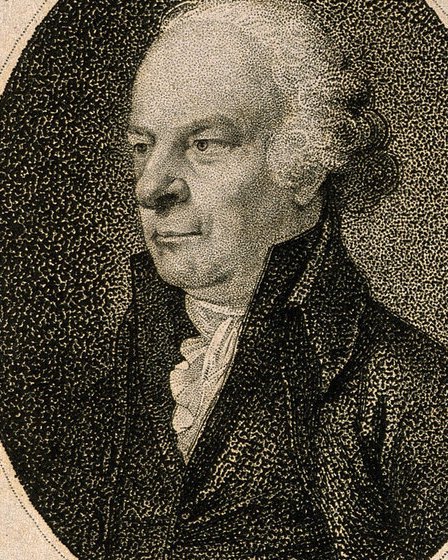
Who they were
Walker was born at Patterdale in Westmorland, the son of a woollen manufacturer.
From Dictionary of National Biography, vol. 59, 'Walker, Adam', by Edward Irving Carlyle: “born at Patterdale in Westmoreland in 1730 or 1731, was the son of a woollen manufacturer” See the page
He left school almost before he could read, and taught himself by hard study.
From Dictionary of National Biography, vol. 59, 'Walker, Adam', by Edward Irving Carlyle: “He was taken from school almost before he could read, but supplied lack of instruction by unremitting study.” See the page
As a boy he built himself a hut, and made models of the local mills.
From Dictionary of National Biography, vol. 59, 'Walker, Adam', by Edward Irving Carlyle: “built for himself a hut in a secluded spot, and occupied his leisure in constructing models of neighbouring corn mills, paper mills, and fulling mills” See the page
At fifteen he became an usher at Ledsham school in the West Riding.
From Dictionary of National Biography, vol. 59, 'Walker, Adam', by Edward Irving Carlyle: “His reputation as a student at the age of fifteen procured him the post of usher at Ledsham school in the West Riding of Yorkshire.” See the page
Joseph Priestley persuaded him to lecture in the Haymarket in 1778.
From Dictionary of National Biography, vol. 59, 'Walker, Adam', by Edward Irving Carlyle: “he met Joseph Priestley [q. v.], who induced him to lecture in the Haymarket in 1778” See the page
The provost of Eton hired him to lecture, and Westminster and Winchester followed.
From Dictionary of National Biography, vol. 59, 'Walker, Adam', by Edward Irving Carlyle: “He was engaged as lecturer by the provost of Eton College, Edward Barnard, whose example was followed by the heads of Westminster, Winchester, and other public schools.” See the page
He designed carriages to go by wind and by steam.
From Dictionary of National Biography, vol. 59, 'Walker, Adam', by Edward Irving Carlyle: “carriages to go by wind and steam” See the page
He built a transparent orrery, the Eidouranion, to show the heavens at his lectures.
From Dictionary of National Biography, vol. 59, 'Walker, Adam', by Edward Irving Carlyle: “Walker also constructed an ‘eidouranion,’ or transparent orrery, which he used to illustrate his astronomical lectures.” See the page
He died at Richmond in Surrey on 11 February 1821.
From Dictionary of National Biography, vol. 59, 'Walker, Adam', by Edward Irving Carlyle: “Walker died at Richmond in Surrey on 11 Feb. 1821.” See the page
In Craven
He toured the mountains and caves near Settle, and sent an account to the General Evening Post.
From Thomas West, A Guide to the Lakes, 2nd edition (London, 1780), Addenda, reprinting Adam Walker's letter from the General Evening Post of 25 September 1779, page 232: “THE GENERAL EVENING POST, SEPT. 25, 1779. ... an account of a tour I made some time ago through the mountains and caverns near Settle” See the page
Near Chapel-le-Dale he found three caverns.
From Thomas West, A Guide to the Lakes, 2nd edition (London, 1780), Addenda, reprinting Adam Walker's letter from the General Evening Post of 25 September 1779, page 232: “Nigh the Chapel in the dale ... I met with three caverns” See the page
He found a white clay in one cave, and tested it with his teeth.
From Thomas West, A Guide to the Lakes, 2nd edition (London, 1780), Addenda, reprinting Adam Walker's letter from the General Evening Post of 25 September 1779, page 237: “I found here a stratum of white clay, perfectly free from grit, when tried by the teeth” See the page
He dated the letter from the Haymarket in London on 20 September 1779.
From Thomas West, A Guide to the Lakes, 2nd edition (London, 1780), Addenda, reprinting Adam Walker's letter from the General Evening Post of 25 September 1779, page 237: “Haymarket, London ... September 20th, 1779.” See the page
The journey
A tour of the caves and scars near Settle, before September 1779. Some time before 20 September 1779, when he wrote it up.
Craven is stops 1 to 7 of 7. Light dots are stops inside Craven. Each stop is a place the writer names, and their words are listed under the maps. Straight lines join the stops. We do not know every road they took.
The stretch in Craven
How we know each stop: all 7, in the writer's own words
1. Chapel-le-Dale · Craven
“Nigh the Chapel in the dale ... I met with three caverns that are totally”, page 232. See the page
2. Ingleborough · Craven
“we once more bless ourselves in broad day-light, and begin to mount the rugged ... Its top may have been a Roman station, for any thing I know”, page 235. See the page
3. Settle · Craven
“In our road to Settle we met with the Ribble ... and with a continued roar makes its way to Settle. From hence I rode through a dreadful fog to Mam (or Malham)”, page 235. See the page
4. Malham · Craven
“From hence I rode through a dreadful fog to Mam (or Malham) ... I got there very safe”, page 235. See the page
5. Malham Tarn · Craven
“My first ... was to the tarn, (or little lake) ... it abounds in fine trout, but has little else remarkable”, page 236. See the page
6. Malham Cove · Craven
“the stone is very white, and from the ledges hang various shrubs and vegetables”, page 236. See the page
Walker is describing the rock where the water from the tarn comes out again, which faces the village.
7. Gordale Scar · Craven
“My guide brought me first to a fine sheet cascade in a glen about half a mile below the scar ... I found here a stratum of white clay”, page 236. See the page
From Thomas West, A Guide to the Lakes, 2nd edition (London, 1780), Addenda, reprinting Adam Walker's letter in the General Evening Post of 25 September 1779.
Another journey
A tour from London to the Lakes, summer 1791. 13 July to 1 September 1791, then home by the same road.
None of the 18 stops is inside Craven. Light dots are stops inside Craven. Each stop is a place the writer names, and their words are listed under the maps. Straight lines join the stops. We do not know every road they took.
How we know each stop: all 18, in the writer's own words
1. Oxford · 13 July 1791
“Oxford, July 13. ... I shall send you an account of my Tour to”. See the page
2. Stratford-upon-Avon
“we pass thro' Stratford without ... we read his anathema upon the wight who should”, page 16. See the page
'His' is Shakespeare's.
3. Birmingham
“Birmingham makes its appearance in smoky majesty, covering two large hills”, page 16. See the page
4. Lichfield · 18 and 19 July 1791
“Litchfield, July 18. ... Litchfield, July. 19.”, page 14. See the page
5. Warrington
“... Warrington we proceeded up the”, page 28. See the page
The sentence begins 'From Warrington' and goes on up the Duke of Bridgewater's canal.
6. Manchester · 25 July 1791
“Manchester, July 25.”, page 28. See the page
7. Wigan
“... Manchester to Wigan, we pass”, page 34. See the page
8. Lancaster · 28 to 30 July 1791
“Lancaster, July 28. ... Lancaster, July 30.”, page 34. See the page
9. Hornby Castle
“On one corner of that which gives grandeur to the look of Hornby Castle, is placed an octogonal Turret”, page 49. See the page
From his letter dated Lancaster, 30 July, on a ride up the Lune valley.
10. Kirkby Lonsdale
“It stands on ... a bank or eminence above the Lune”, page 50. See the page
He is describing Kirkby Lonsdale, the end of the ride up the Lune. The scan garbles the name.
11. Ulverston · 8 August 1791
“Ulverstone, August 8. ... the hazard of our lives we arrived here”, page 51. See the page
He crossed Lancaster Sands in a fog to get there.
12. Hawkshead
“but first we fall down into Hawkshead, a small Market-town”, page 58. See the page
13. Ambleside · 14 and 18 August 1791
“Ambleside, Aug. 14. ... Ambleside, August 18.”, page 71. See the page
14. Kirkstone Pass
“Ascending up Kirkstone along the above Roman Road”, page 76. See the page
15. Patterdale
“... Patterdale we join the Penrith road to Keswick”, page 82. See the page
16. Keswick · 20 to 25 August 1791
“Keswick, Aug. 20 ... Keswick, August 23. ... Keswick, Aug. 25.”, page 95. See the page
17. Kendal · 1 September 1791
“Kendal, Sept. 1.”, page 109. See the page
18. London
“returning to London by the same route with which we”, page 114. See the page
The last line of the journal. He went home the way he came.
From Adam Walker, Remarks made in a Tour from London to the Lakes of Westmoreland and Cumberland, in the Summer of 1791 (London: G. Nicol and C. Dilly, 1792), letters first printed in the Whitehall Evening Post.
3 quotes on 3 places
A bigger dot means more quotes. Tap a dot to open the place.
What they wrote
-
1779 · 20 September 1779
“Consider yourself in a winding street, with houses above an hundred yards high on each side of you; then figure to yourself a cascade rushing from an upper window, and tumbling over carts, waggons, fallen houses, &c. in promiscuous ruin, and perhaps a cockney idea may be formed of this tremendous cliff.”
Adam Walker, lecturer in natural philosophy, writing to the General Evening Post. See the page
Source
Thomas West, A Guide to the Lakes, 2nd edition (London, 1780), Addenda, reprinting the General Evening Post of 25 September 1779, page 236.
-
1779 · 20 September 1779
“the stone is very white, and from the ledges hang various shrubs and vegetables”
Adam Walker, lecturer in natural philosophy, writing to the General Evening Post. See the page
Source
Thomas West, A Guide to the Lakes, 2nd edition (London, 1780), Addenda, reprinting the General Evening Post of 25 September 1779, page 236.
-
1779 · 20 September 1779
“it abounds in fine trout, but has little else remarkable”
Adam Walker, lecturer in natural philosophy, writing to the General Evening Post. See the page
Source
Thomas West, A Guide to the Lakes, 2nd edition (London, 1780), Addenda, reprinting the General Evening Post of 25 September 1779, page 236.