Settle town trail
Easy 2.4 miles · 66 m climb · about 53 min · a loop
Start: Settle station, on the Settle to Carlisle line. From the car parks, start at the Market Place. With Harry Speight, Frederick Smeeton Williams, Thomas Gray.
Before you go
- The path up Castleberg Crag is steep, with steps. Settle Town Council sometimes closes it, as it did for a day of tree work in February 2026.
A dungeon under the market, a sleeping navvy, a rock that was a sundial, and lightning in church.
With children? Give them the phone. At each stop, one reads the story aloud and the other collects the stamp. Each stamp stays hidden until you collect it.
1 · Settle station
Read this aloud, or listen
In 1876 men called navvies were building the railway here. At dinner time they lay down on big piles of timber in the station yard, and slept. A visitor wrote that they snored like rich men in feather beds. Out on the boggy moor, wheels sank, so the navvies sent food and bricks on a cart that rolled along on a barrel. Sometimes the horses pulling it sank up to their middles, and had to be pulled out by their necks.
This story comes from Frederick S. Williams, writing in 1876.
When you get there If the signal box is open, climb its steps and pull a lever. Watch which signal moves.
“to Giggleswick, a village with a small piece of water by its side cover'd over with coots”
Thomas Gray, 12 October 1769. See the page
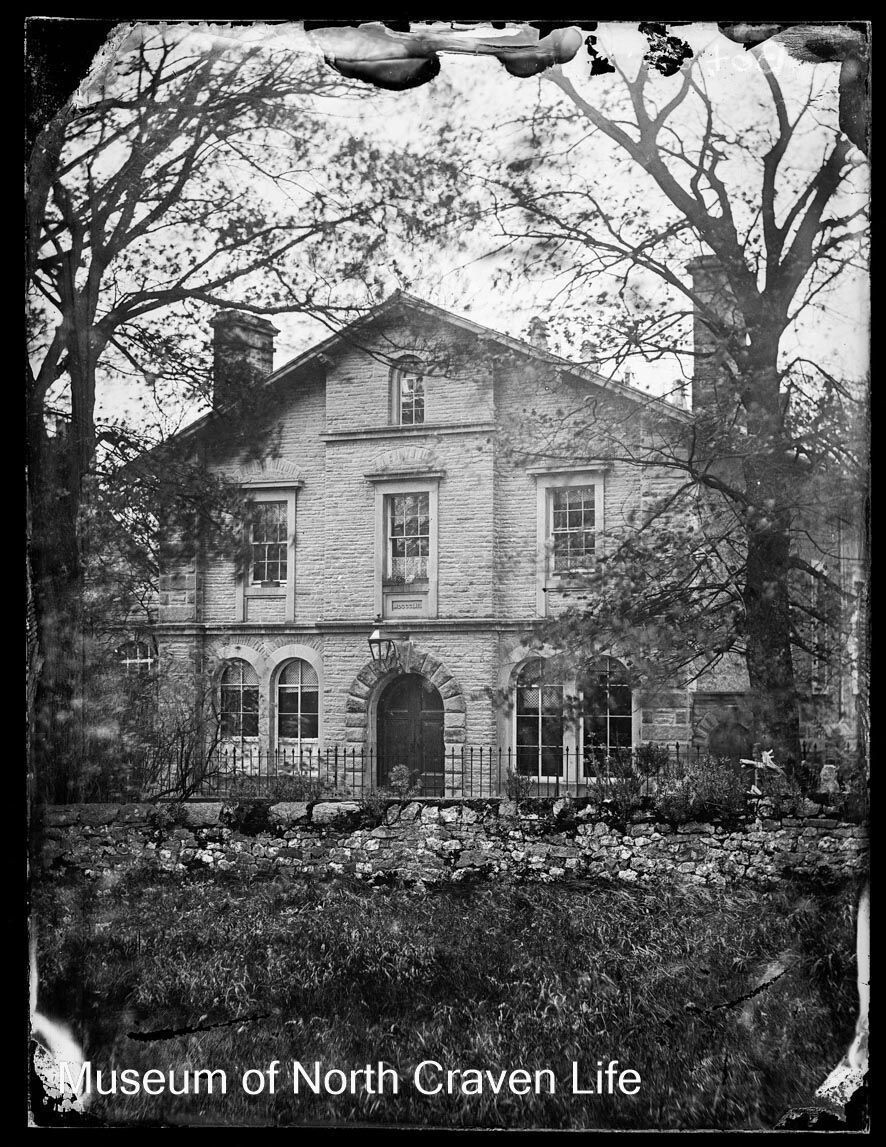
The Victoria Hall, Settle, Horner Photographic Studio, up to about 1885. The Horner Photographic Collection, Museum of North Craven Life (The Folly), Settle. CC BY 4.0. See the work 2 · Victoria Hall · 0.2 miles
Read this aloud, or listen
In 1866 the famous General Tom Thumb came to the Music Hall in Settle, with his wife and her sister, Minnie Warren. The newspaper called Minnie infinitesimal, which means very, very small. Lots of children came to see the show. The newspaper joked that their parents came too, pretending to look after the children, but really because they wanted to see.
This story comes from the Settle Chronicle, in 1866.
When you get there Stand across the street and look at the hall. Would you have queued to see Tom Thumb?
“arrived at Settle ... my Inn pleased me much (tho' small) for the neatness and civility of the good woman that kept it, so I lay there two nights”
Thomas Gray, 12 October 1769. See the page
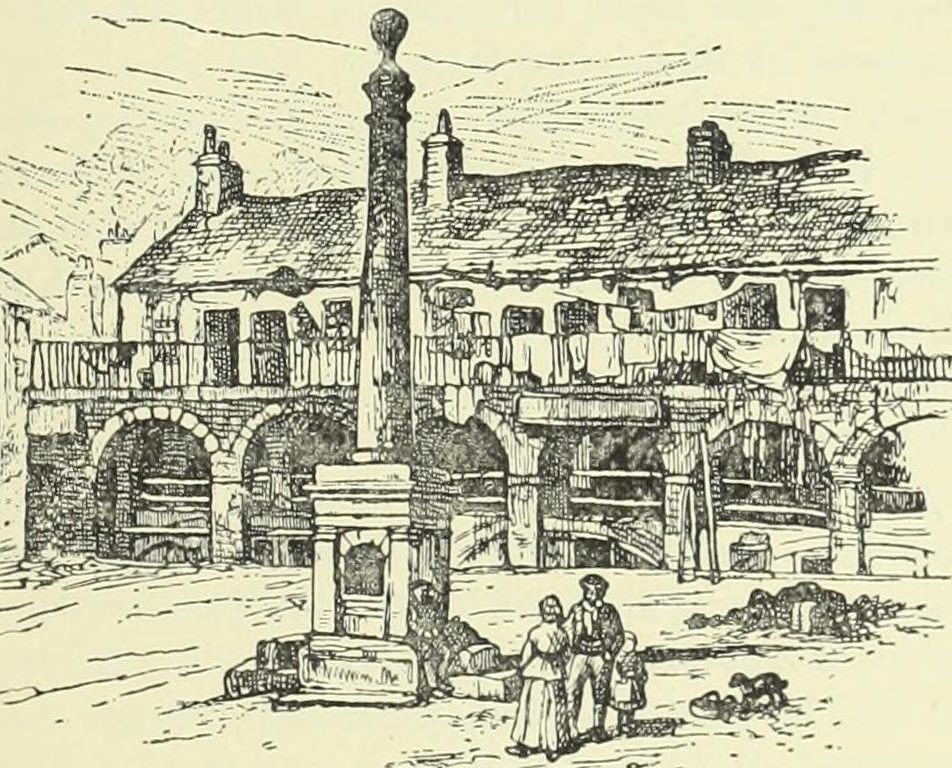
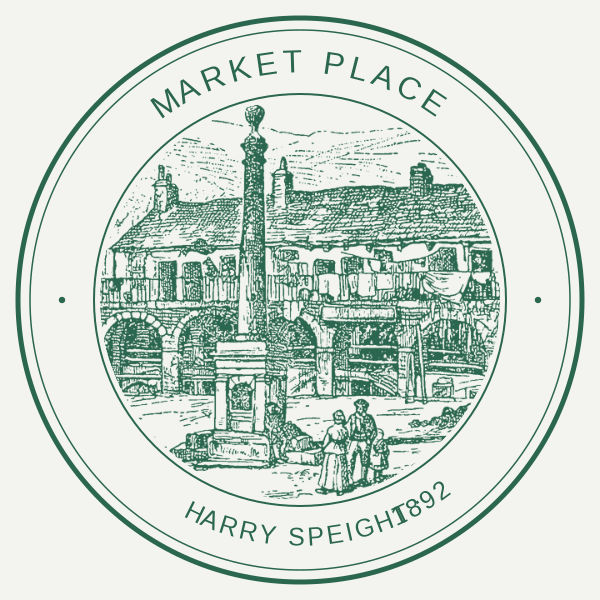
Market Place, Settle. From Harry Speight, The Craven and North-West Yorkshire Highlands (London: Elliot Stock, 1892). See the page 3 · Market Place · 0.4 miles
Read this aloud, or listen
Under the old market cross there was a dungeon called the Black Hole. You went down a flight of steps into it. A newspaper of 1863 said it was a terror to naughty children. The town filled it in, and put up a drinking fountain near the spot. Low down on the fountain are little troughs of water, so that dogs can have a drink too.
This story comes from the Settle Chronicle, in 1863, and Harry Speight, writing in 1892.
When you get there Find the fountain and its troughs for dogs. Then look round the square for a stone man holding a sign. What year is carved on it?
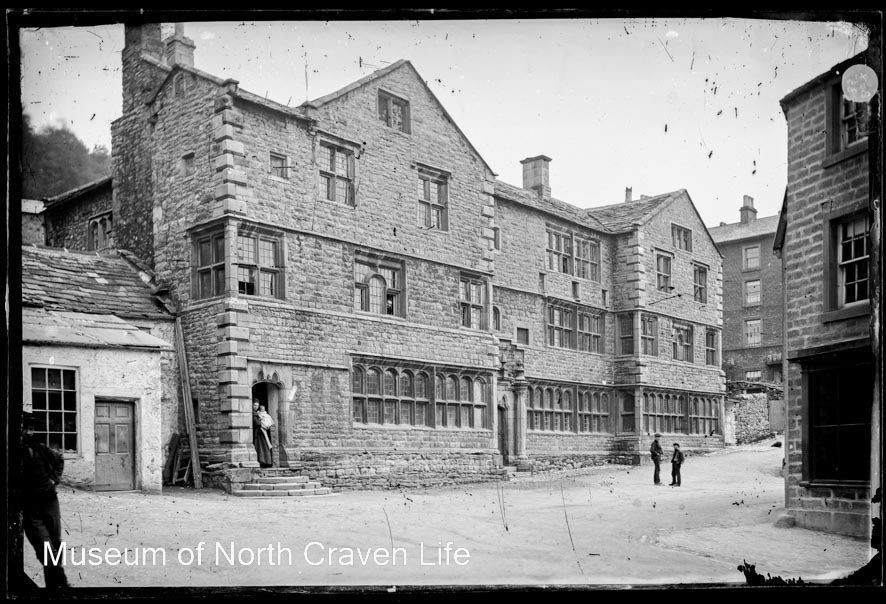
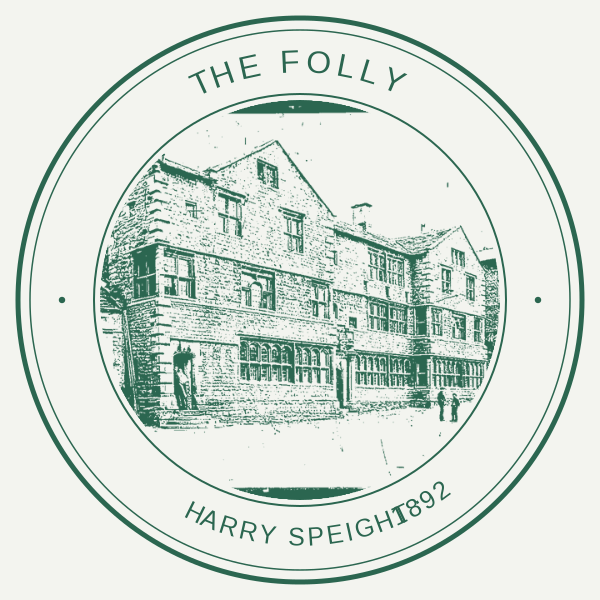
The Folly, Settle, Horner Photographic Studio, about 1858 to about 1885. The Horner Photographic Collection, Museum of North Craven Life (The Folly), Settle. CC BY 4.0. See the work 4 · The Folly · 0.5 miles
Read this aloud, or listen
A family called Preston built this great house, but they never finished it. Harry Speight wrote in 1892 that the money ran out. That, he said, is why it has a tell-tale name: the Folly. Inside, he wrote, there is a panelled room with a secret passage.
This story comes from Harry Speight, writing in 1892, and J. Radford Thomson, writing in 1879.
When you get there The house has a very large number of windows. Count the windows on the front.
“At the top of the town, and just below Castleberg, is a remarkable old stone house bearing the date 1679, with a very large number of mullioned windows ... The house is now the dwelling of a farmer, and has certainly fallen from its former splendour.”
J. Radford Thomson, 1879. See the page
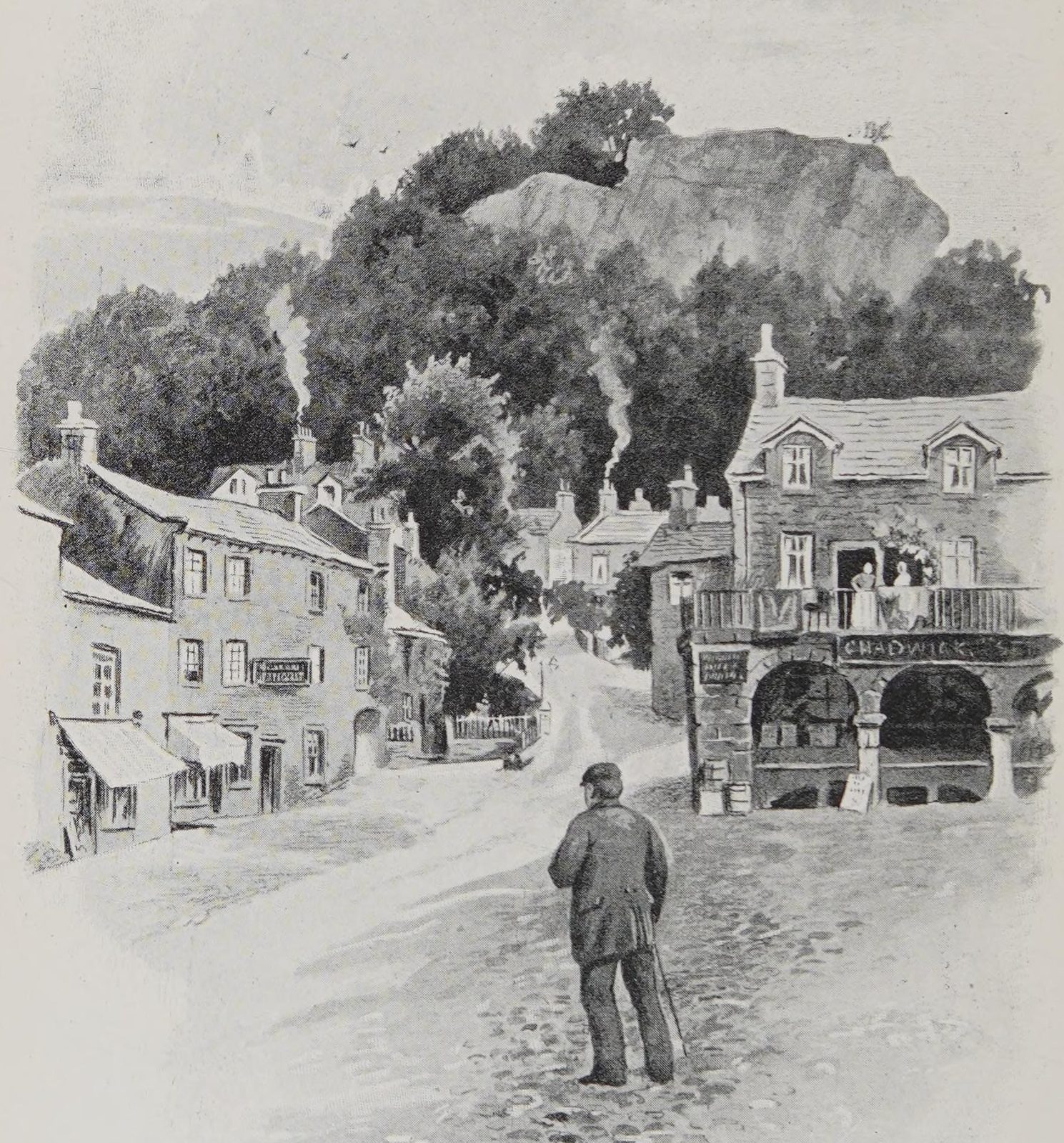
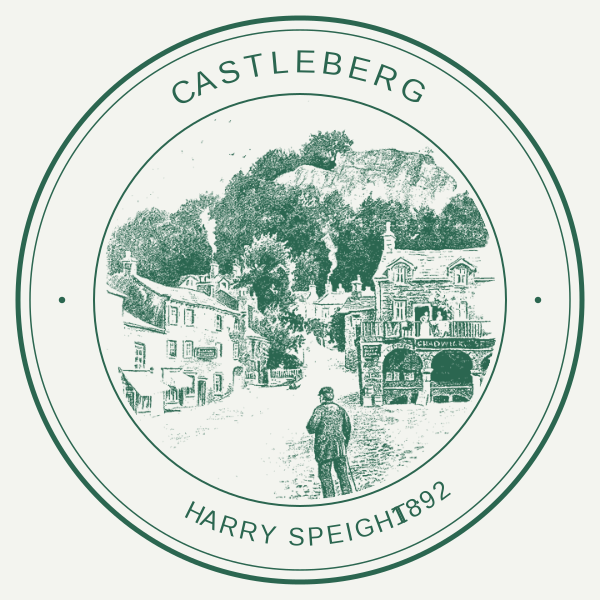
Castleberg, Settle, J. Ayton Symington. From J. S. Fletcher, A Picturesque History of Yorkshire, vol. III (London: J. M. Dent, 1901). See the page 5 · Castleberg · 0.7 miles
Read this aloud, or listen
The top of Castleberg, the rock above Settle, was once part of a huge sundial. Its shadow moved across big stones on the hillside, and told the town the time. The stones were taken away long ago, and trees grow there now.
This story comes from Thomas Dunham Whitaker, writing in 1805, and William Howson, writing in 1850.
When you get there Climb to the top and look down on the town. Then look at your own shadow. Which way would the rock's shadow fall now?
“From the top of Castleberg, where seats have been placed, the prospect northwards and westwards is exceedingly fine”
Harry Speight, 1892. See the page
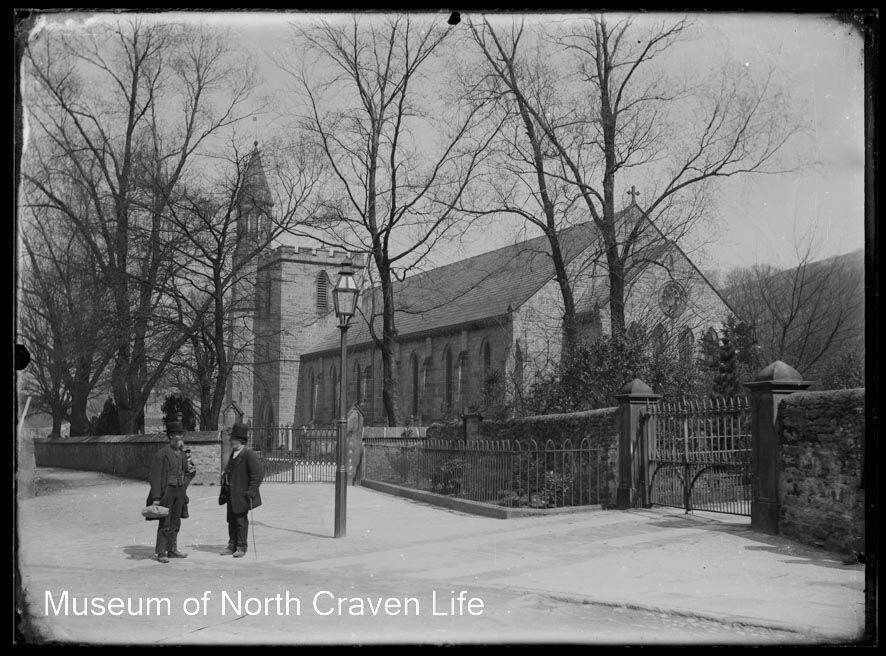
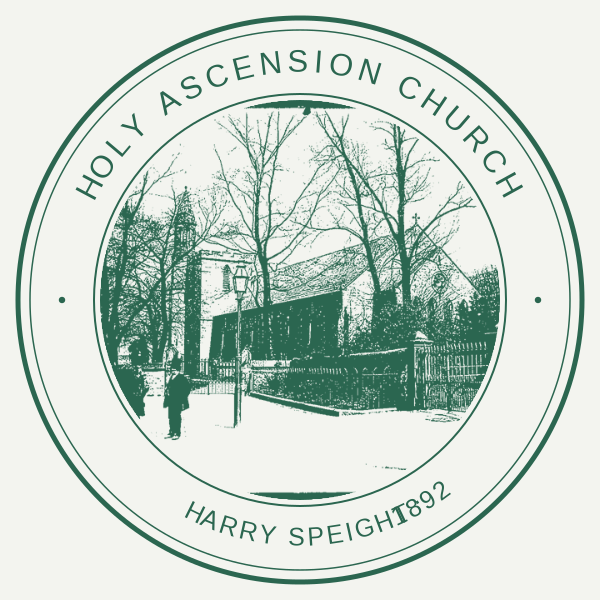
Holy Ascension church from the street, Settle, Horner Photographic Studio, about 1875 to about 1925, Victorian. The Horner Photographic Collection, Museum of North Craven Life (The Folly), Settle. CC BY 4.0. See the work 6 · Holy Ascension Church · 1.2 miles
Read this aloud, or listen
One day in 1856 a storm broke over Settle while children were in this church. The children heard a crackle, like a loud match being struck. One girl felt a pain strike her eyes. Someone saw a spark of fire burst in the air, just above the children's heads.
This story comes from the Settle Chronicle, in 1856, and Harry Speight, writing in 1892.
When you get there Most old churches point east. Harry Speight noticed that this one stands north and south. Use the sun, or a phone's compass, to check which way it points.
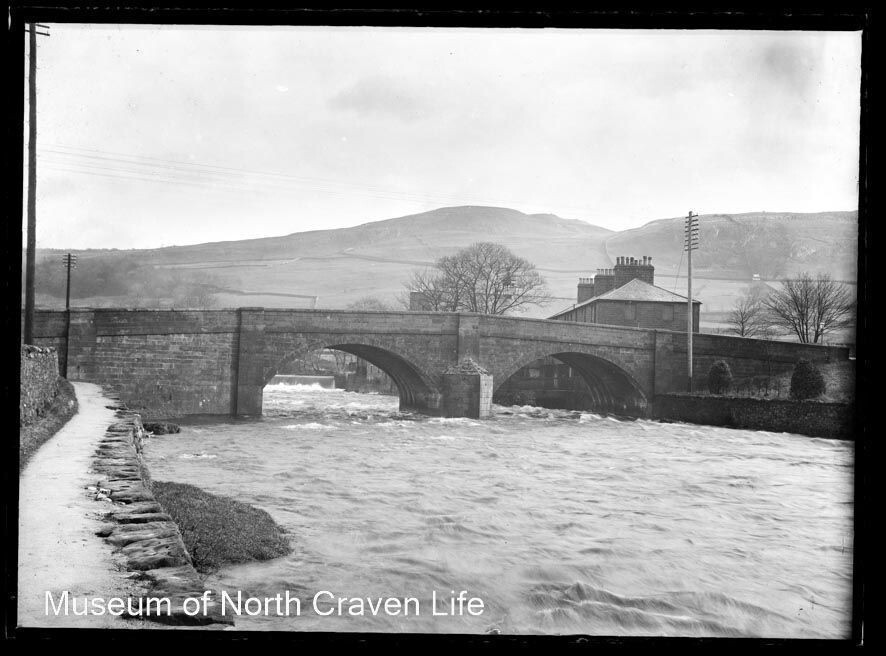
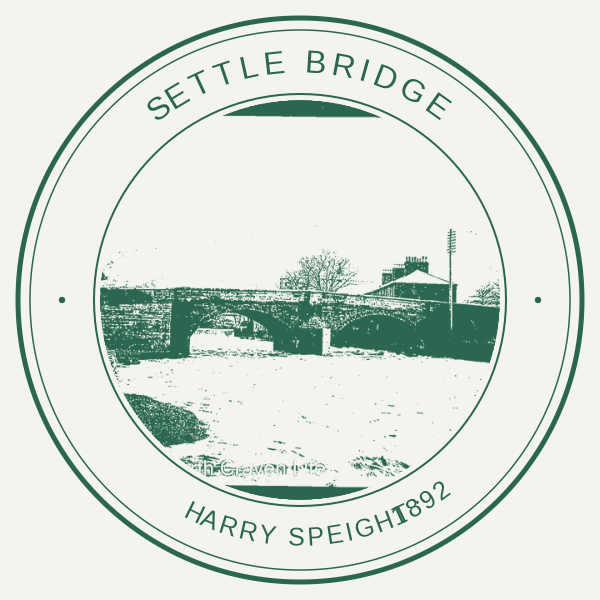
Settle Bridge over the Ribble, Horner Photographic Studio, up to about 1925, Victorian. The Horner Photographic Collection, Museum of North Craven Life (The Folly), Settle. CC BY 4.0. See the work 7 · Settle Bridge · 1.6 miles
Read this aloud, or listen
Stand on the bridge and look up the valley. The big hill you can see up the valley is Pen-y-ghent. A man called Paley is said to have thought it looked like a huge plum cake. Another old book says he called it a raised pie. One half of this bridge is very old. It has three ribs of stone under its arch. The other half was added later, and its stones are flat.
This story comes from Murray's Handbook for Travellers in Yorkshire, in 1867, William Howson, writing in 1850, and Harry Speight, writing in 1892.
When you get there Look downstream for the weir and the giant screw beside it. It turns to make electricity from the river. Is it turning today?
“When the church was built, the old bridge over the Ribble was widened, the eastern or older portion shewing three arched "ribs" of single blocks of grit ... while the western or new half of the bridge has ordinary flat masonry.”
Harry Speight, 1892. See the page
Stamp it here uses your phone's location, on your phone only, and works within 200 m of the stop. Stamp it from home marks the stamp as collected from home. Route: © OpenStreetMap contributors. Heights: SRTM, through Open Topo Data. Walk with care, keep to the paths, and follow the Countryside Code.