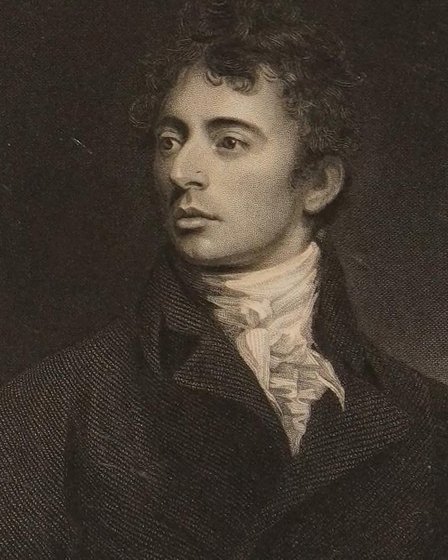
Who they were
Southey was born at Bristol on 12 August 1774, the son of a linen draper.
From Dictionary of National Biography, vol. 53, 'Southey, Robert', by Richard Garnett: “was born at Bristol on 12 Aug. 1774. His father, Robert Southey, a linendraper” See the page
Before he was eight he had read every play in his aunt's library.
From Dictionary of National Biography, vol. 53, 'Southey, Robert', by Richard Garnett: “Southey before he was eight had read all the plays in her library” See the page
Westminster School expelled him in 1792 for an attack on flogging in a school magazine.
From Dictionary of National Biography, vol. 53, 'Southey, Robert', by Richard Garnett: “he was privately expelled in 1792 for a misdemeanour for which he deserved honour, a protest against excessive flogging made in a school magazine entitled ‘The Flagellant.’” See the page
In 1794 he and Coleridge planned an ideal community on the banks of the Susquehanna.
From Dictionary of National Biography, vol. 53, 'Southey, Robert', by Richard Garnett: “framed their scheme for an ideal life on the banks of the Susquehanna” See the page
He married Edith Fricker at Bristol on 14 November 1795.
From Dictionary of National Biography, vol. 53, 'Southey, Robert', by Richard Garnett: “united himself at St. Mary Redcliffe, Bristol, to Edith Fricker on 14 Nov. 1795” See the page
In 1803 he moved to Greta Hall at Keswick, his home for the rest of his life.
From Dictionary of National Biography, vol. 53, 'Southey, Robert', by Richard Garnett: “Southey removed in 1803 to Greta Hall, Keswick, his residence for the remainder of his life” See the page
At Keswick he built up a library of fourteen thousand books.
From Dictionary of National Biography, vol. 53, 'Southey, Robert', by Richard Garnett: “where he formed a library consisting of fourteen thousand volumes” See the page
In 1813 Walter Scott passed the post of poet laureate on to him.
From Dictionary of National Biography, vol. 53, 'Southey, Robert', by Richard Garnett: “when in 1813 the poet-laureateship was offered to himself, he generously transferred it to Southey” See the page
He died of a fever on 21 March 1843, and lies in Crosthwaite churchyard.
From Dictionary of National Biography, vol. 53, 'Southey, Robert', by Richard Garnett: “He died from the effects of a fever on 21 March 1843. He was buried in Crosthwaite churchyard” See the page
In Craven
Southey set his book The Doctor at Chapel-le-Dale, the birthplace of its hero, Daniel Dove.
From Harry Speight, The Craven and North-West Yorkshire Highlands (London: Elliot Stock, 1892), page 223: “Southey gives some delightful descriptive touches in his book called The Doctor ... the birthplace of Doctor Daniel Dove” See the page
In the book, Daniel Dove is born near Ingleton on 22 April 1723.
From Robert Southey (published anonymously), The Doctor, &c., vol. I (London: Longman, 1834), page 56: “was born near Ingleton in the West Riding of Yorkshire, on Monday the twenty second of April, old style, 1723” See the page
He put the Dove family house a bow shot from the church at Chapel-le-Dale.
From Robert Southey (published anonymously), The Doctor, &c., vol. I (London: Longman, 1834), page 57: “The little church called Chapel le Dale, stands about a bow shot from the family house.” See the page
Speight says the Metcalfe house at Weathercote was the model for Daniel Dove's home.
From Harry Speight, The Craven and North-West Yorkshire Highlands (London: Elliot Stock, 1892), page 247: “whose house (the original of Daniel Dove’s in Southey’s story of the Doctor) is close by” See the page
The nursery tale of The Three Bears sits in chapter 129 of The Doctor.
From Dictionary of National Biography, vol. 53, 'Southey, Robert', by Richard Garnett: “The nursery classic—‘The Three Bears’—is embedded in chap. 129.” See the page
1 quote on 1 place
A bigger dot means more quotes. Tap a dot to open the place.
What they wrote
-
1834
“The sheep came over the wall when they listed, and sometimes took shelter in the porch from the storm.”
Robert Southey, poet, in his novel The Doctor. See the page
Source
The Doctor, &c., vol. I (London: Longman, 1834), page 58.