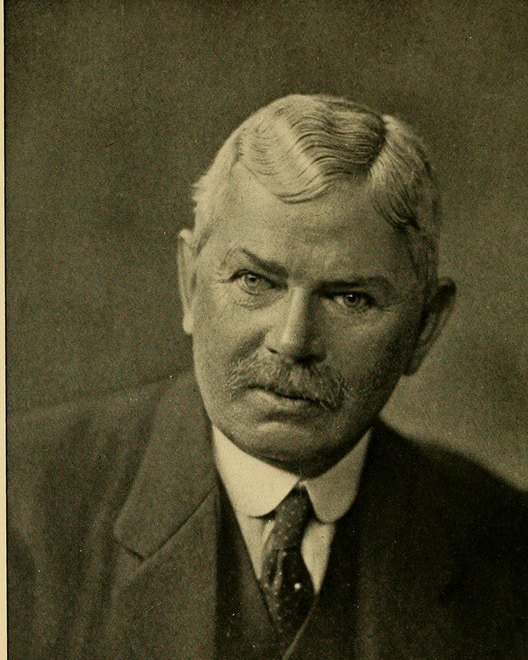
Who they were
Marr was born at Poulton, near Lancaster, on 14 June 1857.
From J. A. Venn, Alumni Cantabrigienses, Part II, vol. 4 (Cambridge, 1951), page 321: “B. [June 14, 1857], at Poulton, Lancaster.” See the page
He went to school in Lancaster and then to St John's College, Cambridge.
From Yorkshire Post and Leeds Intelligencer, 3 October 1933, page 4, British Newspaper Archive free extract: “he was educated at Lancaster School and St John's College, Cambridge.” See the page
He led the Geological Society as its president from 1904 to 1906.
From J. A. Venn, Alumni Cantabrigienses, Part II, vol. 4 (Cambridge, 1951), page 321: “F.G.S.; Lyell ... medal, 1900; President, 1904-6” See the page
Cambridge made him its Woodwardian Professor of Geology. He held the chair from 1917 to 1930.
From Gloucester Citizen, 2 October 1933, page 7, British Newspaper Archive free extract: “who was Woodwardian Professor of Geology in the University 1917-30” See the page
The Royal Society made him a Fellow in 1891, and it gave him its Royal Medal in 1930.
From J. A. Venn, Alumni Cantabrigienses, Part II, vol. 4 (Cambridge, 1951), page 321: “F.R.S., 1891; Royal medal, 1930.” See the page
He once argued out on the hills with Tiddeman, who read the hills as reefs. The Yorkshire Post called it a kind of duel.
From Yorkshire Post and Leeds Intelligencer, 3 October 1933, page 4, British Newspaper Archive free extract: “was a kind of duel conducted on the hills themselves between Professor Marr himself and the late Mr. Tlddlman, who Interpreted the hills reefs.” See the page
His poor eyesight held back his work, and in the end he went almost blind.
From J. A. Venn, Alumni Cantabrigienses, Part II, vol. 4 (Cambridge, 1951), page 321: “Defective eyesight hampered his scientific work and he eventually became almost totally blind.” See the page
He lived on Huntingdon Road in Cambridge, and he died on 1 October 1933.
From J. A. Venn, Alumni Cantabrigienses, Part II, vol. 4 (Cambridge, 1951), page 321: “Lived at 126, Huntingdon Road, Cambridge. Died Oct. 1, 1933.” See the page
In Craven
In May 1890 he wrote in the Naturalist about an old lava at Wharfe, near Austwick. Speight quoted him in his book on Craven.
From Harry Speight, The Craven and North-West Yorkshire Highlands (London: Elliot Stock, 1892), page 166: “writing in the Naturalist for May, 1890, observes ... It is interesting to find an old acid lava at Wharfe Mill Dam, near Austwick” See the page
1 quote on 1 place
A bigger dot means more quotes. Tap a dot to open the place.
What they wrote
-
1890
“It is interesting to find an old acid lava at Wharfe Mill Dam, near Austwick”
J. E. Marr, Cambridge geologist, writing in the Naturalist in May 1890. See the page
Source
Harry Speight, The Craven and North-West Yorkshire Highlands (London: Elliot Stock, 1892), page 166.