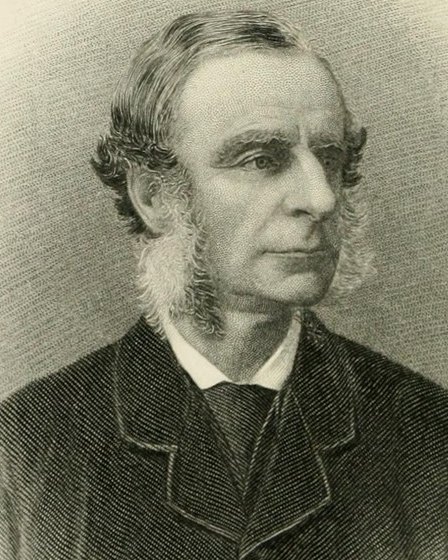
Who they were
Kingsley was born at Holne Vicarage in Devon on 12 June 1819.
From Dictionary of National Biography, vol. 31, 'Kingsley, Charles', by Leslie Stephen: “was born on 12 June 1819 at Holne Vicarage, Devonshire” See the page
At four he was already writing sermons and poems.
From Dictionary of National Biography, vol. 31, 'Kingsley, Charles', by Leslie Stephen: “Charles was a precocious child, writing sermons and poems at the age of four.” See the page
In July 1842 the Bishop of Winchester ordained him curate of Eversley in Hampshire.
From Dictionary of National Biography, vol. 31, 'Kingsley, Charles', by Leslie Stephen: “in July 1842 was ordained by the Bishop of Winchester to the curacy of Eversley, Hampshire” See the page
He wrote for working men under the name Parson Lot.
From Dictionary of National Biography, vol. 31, 'Kingsley, Charles', by Leslie Stephen: “He took the signature ‘Parson Lot,’” See the page
He wrote Westward Ho! at Bideford.
From Dictionary of National Biography, vol. 31, 'Kingsley, Charles', by Leslie Stephen: “settled with his family at Bideford ... Here he wrote ‘Westward Ho!’” See the page
In May 1860 he became professor of modern history at Cambridge.
From Dictionary of National Biography, vol. 31, 'Kingsley, Charles', by Leslie Stephen: “In May 1860 he was appointed to the professorship of modern history at Cambridge” See the page
His wife said The Water Babies, of 1863, was perhaps the last book he wrote with real ease.
From Dictionary of National Biography, vol. 31, 'Kingsley, Charles', by Leslie Stephen: “The ‘Water Babies,’ published in 1863, was, says Mrs. Kingsley, ‘perhaps the last book, except his West Indian one, that he wrote with any real ease.’” See the page
He stammered in talk, but could avoid it when he spoke in public.
From Dictionary of National Biography, vol. 31, 'Kingsley, Charles', by Leslie Stephen: “He was troubled by a stammer. He prescribed and practised rules for its cure, but never overcame it in conversation, although in public speaking he could avoid it.” See the page
He became a canon of Westminster in 1873.
From Dictionary of National Biography, vol. 31, 'Kingsley, Charles', by Leslie Stephen: “In 1873 he was appointed canon of Westminster” See the page
He died on 23 January 1875, and lies at Eversley.
From Dictionary of National Biography, vol. 31, 'Kingsley, Charles', by Leslie Stephen: “He died peacefully on 23 Jan. 1875. He was buried at Eversley on 28 Jan.” See the page
In Craven
In July 1858 he came to Yorkshire to see the places for a novel about the Pilgrimage of Grace.
From Charles Kingsley: His Letters and Memories of His Life, edited by his wife (New York: Scribner, Armstrong, 1877), page 284: “A new novel was now projected on the subject of the Pilgrimage of Grace, which made it necessary for him to go into Yorkshire for a few days to identify places and names.” See the page
Mr Forster and Mr Morrison of Malham looked after him.
From Charles Kingsley: His Letters and Memories of His Life, edited by his wife (New York: Scribner, Armstrong, 1877), page 284: “thanks to the kindness of his friend, Mr. (now the Rt. Hon.) E. Forster, and Mr. Morrison, of Malham, it was a very charming one” See the page
At Bolton he jumped over the Strid.
From Charles Kingsley: His Letters and Memories of His Life, edited by his wife (New York: Scribner, Armstrong, 1877), page 284: “Tell R. I jumped over the Strid where young Romilly was drowned.” See the page
He never finished the novel.
From Charles Kingsley: His Letters and Memories of His Life, edited by his wife (New York: Scribner, Armstrong, 1877), page 284: “The novel was partly written, but never finished.” See the page
1 quote on 1 place
A bigger dot means more quotes. Tap a dot to open the place.
What they wrote
-
1858 · July 1858
“Tell R. I jumped over the Strid where young Romilly was drowned.”
Charles Kingsley, novelist and clergyman, in a letter home. See the page
Source and note
Charles Kingsley: His Letters and Memories of His Life, edited by his wife (New York: Scribner, Armstrong, 1877), page 284.
The letter is headed Wharfside, July 1858, in the scan. In it Kingsley asks for the children to learn Wordsworth's ballad on the Strid.