The lost dungeon of Settle
Somewhere under Settle's Market Place is a dungeon. Nobody has seen it for over 150 years. Eight clues, all things you can see in the town today, lead you to stand right on top of it.
- One of you reads the clues. One holds the phone. Everyone looks.
- Start in the Market Place, by the fountain. It is 2 minutes from Whitefriars car park and toilets, and 6 minutes from the station.
- About 2.5 miles, and an hour and a half to two hours with the climb up Castleberg.
- Free. Every clue is something real in the town, and every answer comes from an old book, newspaper or listing.
Clue 1 of 8 · The Naked Man
Start in the Market Place, by the fountain. It is 2 minutes from Whitefriars car park and toilets, and 6 minutes from the station.
On a building in the Market Place, a little stone man holds up a shield. What two letters are carved on his shield?
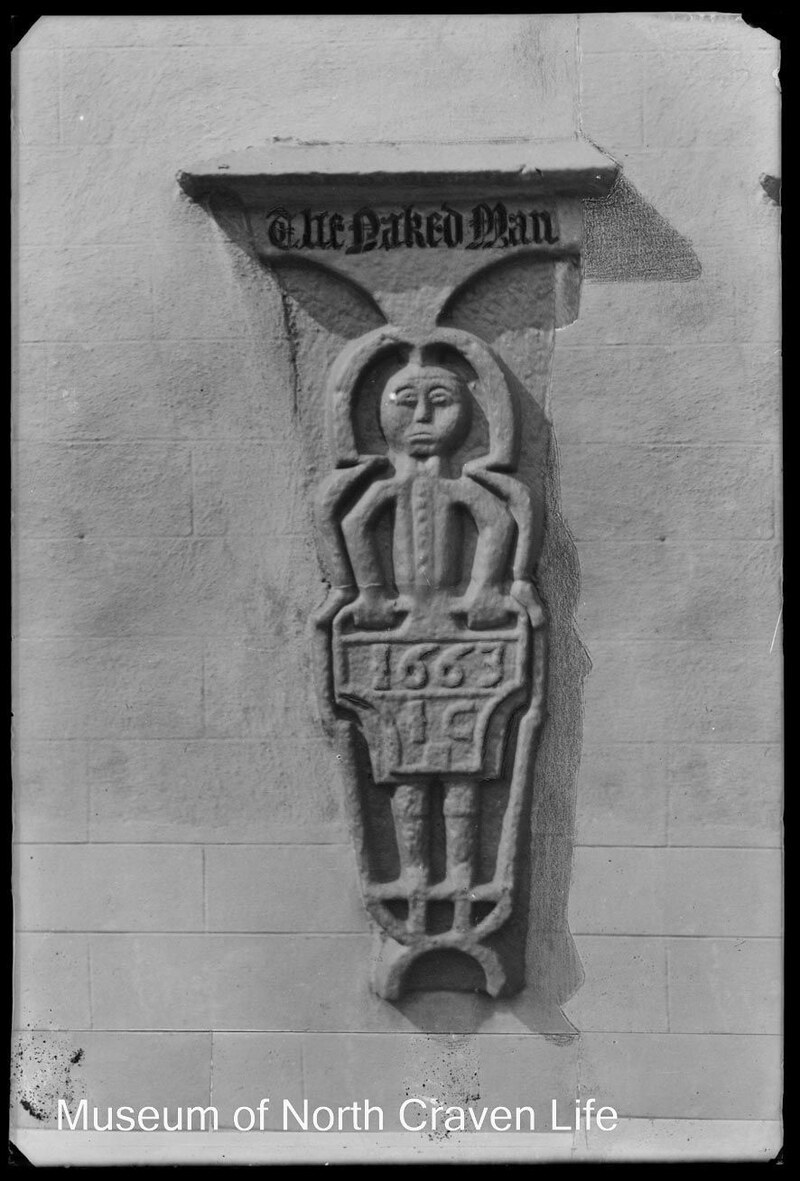
The Naked Man, Settle, Horner Photographic Studio Harry Speight saw him in 1892: a stone figure "holding a shield inscribed I C 1663". Keep the year 1663. You will need it.
The stamp for The Naked Man is in your book.
How we know
- “To left of right-hand window is a crude relief carving of a man holding a dated panel with initials IC.” Historic England's listing of the Naked Man Sweet Shop. See the page
- “About the Market Place are several very old inns, one of which exhibits a stone figure of a naked man or boy, holding a shield inscribed I C 1663.” Harry Speight, 1892. See the page
Clue 2 of 8 · The fountain
Right here, in the Market Place.
Find the fountain in the Market Place. Low down on it are little troughs, so that dogs can have a drink. How many troughs are there?
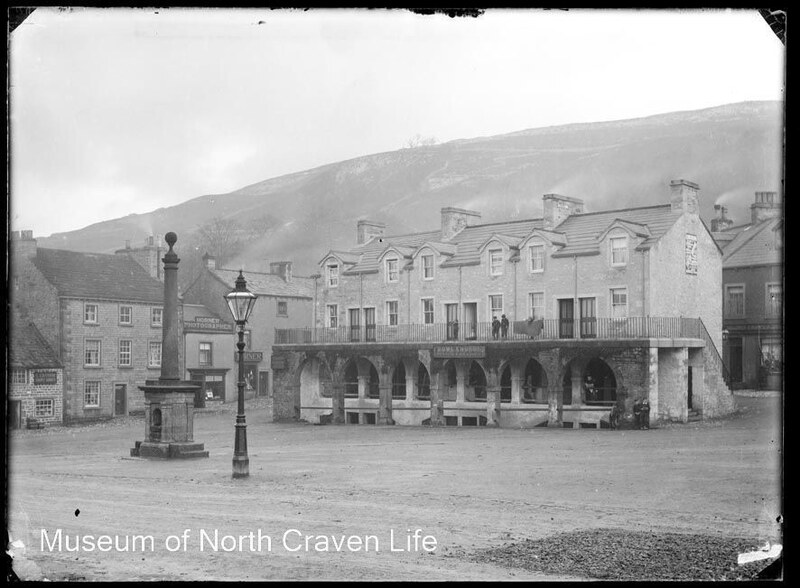
The fountain and the Shambles, Market Place, Settle, Horner Photographic Studio In 1863 the Settle Chronicle said the troughs were for "the neglected members of the canine race". That means dogs.
The stamp for Market Place is in your book.
How we know
- “Square base with 2 drinking troughs” Historic England's listing of the fountain. See the page
- “One of these silently useful "institutions" has just been erected in the Market Place, at Settle ... stands upon the site of the old Market Cross ... in two small niches near the ground there are troughs of water, in which the neglected members of the canine race may also quench their thirst.” Settle Chronicle, 1863. See the page
Clue 3 of 8 · The Shambles
Right here, in the Market Place.
Find the row of shops with arches. Hold up this old photograph and compare. What has been built on top since the photograph was taken?
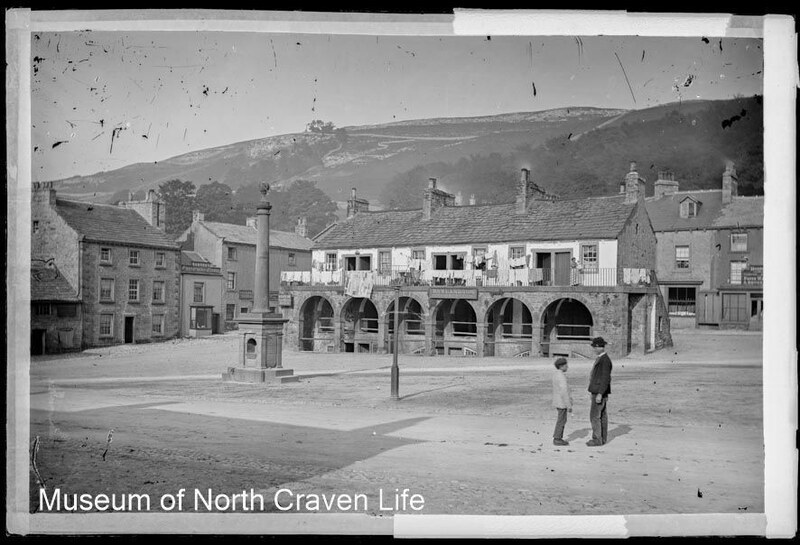
The Shambles with one storey above the arches, Settle, Horner Photographic Studio 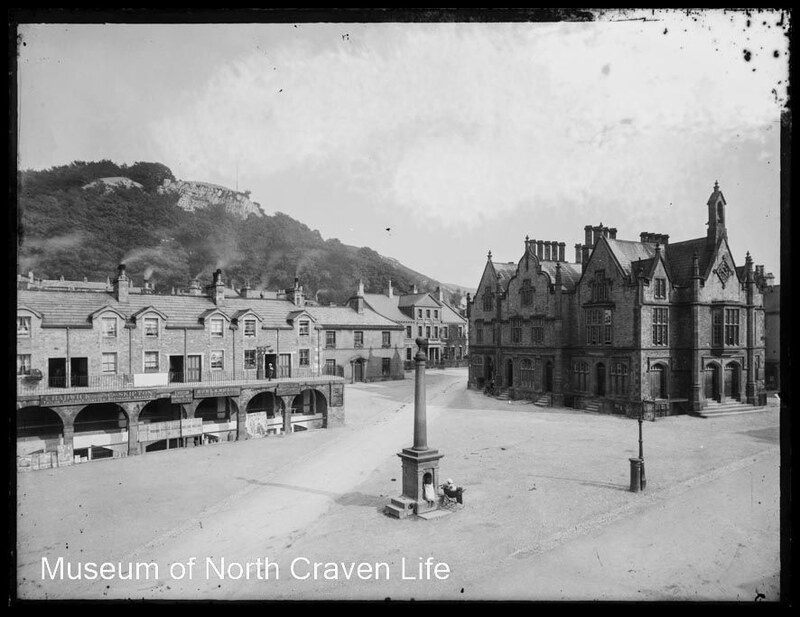
The Shambles with two storeys above the arches, Settle, Horner Photographic Studio The cottages on top went up in the 1890s. In 1856 soldiers parked their guns in front of the Shambles, with a camel.
The stamp for The Shambles is in your book.
How we know
- “Shambles, probably C17 and C18 with 1890s cottages over.” Historic England's listing of the Shambles. See the page
Clue 4 of 8 · The Folly
About 160 metres south-east of the last clue.
Walk up the hill to The Folly, the big old house with a great many windows. A date is carved on it. What year?
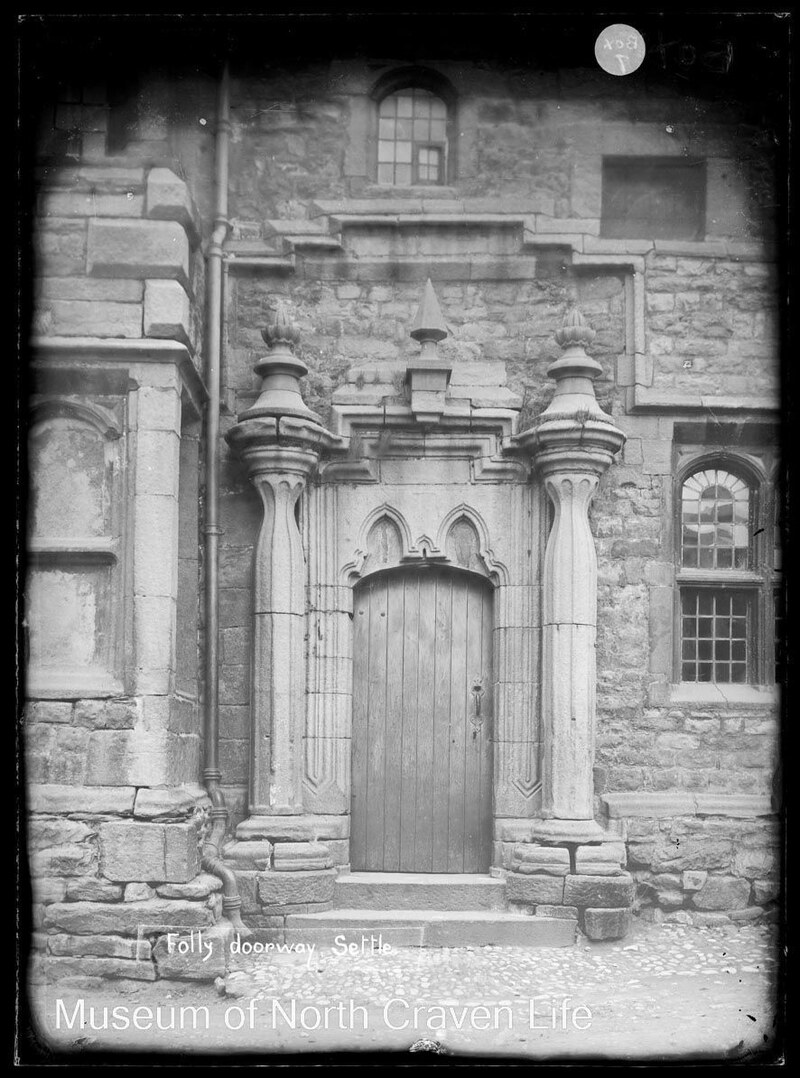
The doorway of the Folly, Settle, Horner Photographic Studio The house was never finished, Harry Speight said, so it got a tell-tale name. Keep the year 1679.
The stamp for The Folly is in your book.
How we know
- “At the top of the town, and just below Castleberg, is a remarkable old stone house bearing the date 1679, with a very large number of mullioned windows ... The house is now the dwelling of a farmer, and has certainly fallen from its former splendour.” J. Radford Thomson, 1879. See the page
Clue 5 of 8 · Castleberg
About 290 metres north of the last clue.
Climb the zigzag path to the top of Castleberg. Hold up this photograph, taken from the top long ago. Stand where the photographer stood. What has changed?
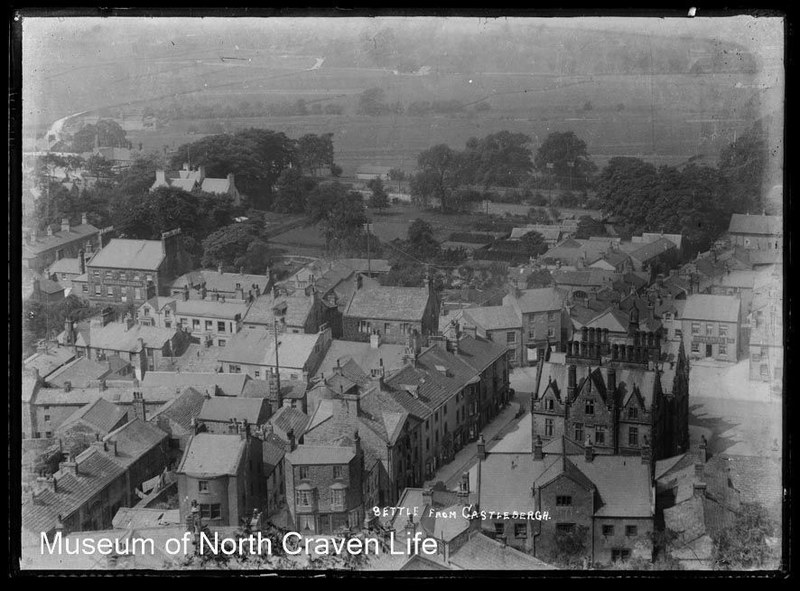
Settle Market Place from Castleberg, Horner Photographic Studio Long ago this rock was a giant sundial. Its shadow crept over big stones on the hillside, and told the town the time.
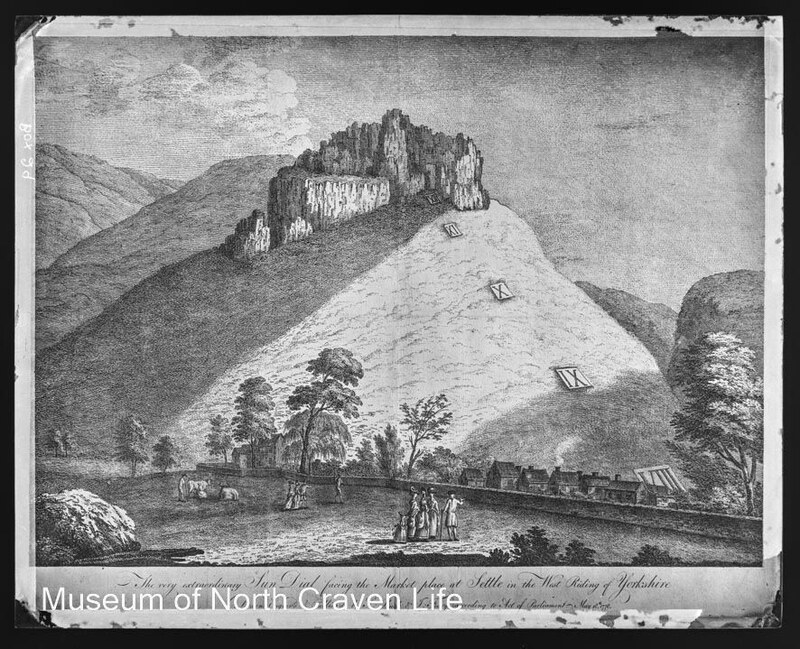
The sundial on Castleberg, from a print of the 1770s, Horner Photographic Studio The stamp for Castleberg is in your book.
How we know
- “The summit of Castleberg once formed the gnomon of a rude but magnificent sun-dial, the shadow of which passing over some grey self stones upon its side, marked the progress of time to the inhabitants of the town beneath” Thomas Dunham Whitaker, 1805. See the page
Clue 6 of 8 · Holy Ascension Church
About 180 metres west of the last clue.
Come down to Holy Ascension church. Most old churches point east. Use a compass on the phone, or the sun, and look along the church. Which way does it point?
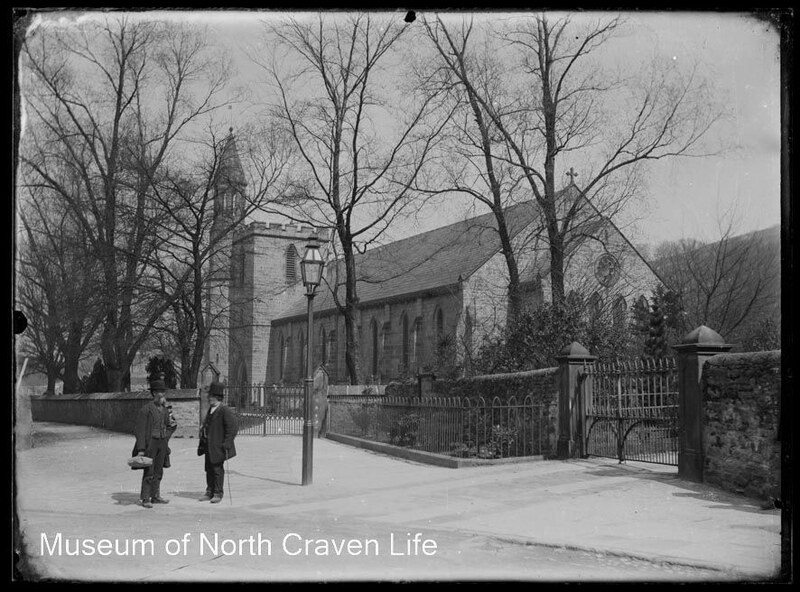
Holy Ascension church from the street, Settle, Horner Photographic Studio Harry Speight noticed it in 1892: "a peculiarity in the construction of the church is that it stands north and south."
The stamp for Holy Ascension Church is in your book.
How we know
- “In the year of Her Majesty's accession a church was built at Settle. It is in the Early English style, and comprises a chancel, nave, and embattled tower at the west end. It has a neat interior, but a peculiarity in the construction of the church is that it stands north and south.” Harry Speight, 1892. See the page
Clue 7 of 8 · Settle Bridge
About 370 metres north-west of the last clue.
Walk down to Settle Bridge, over the river. Look up the valley for Pen-y-ghent, the big hill. An old guidebook said that from this bridge it looks like a huge... what? Look at its shape.
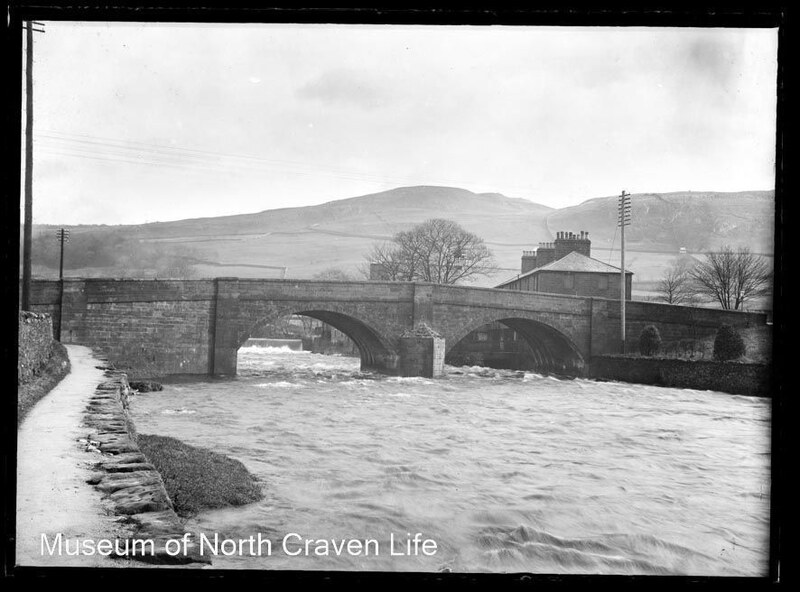
Settle Bridge over the Ribble, Horner Photographic Studio Murray's guidebook said so in 1867, "as Paley is said to have remarked". Below the bridge, look for the giant screw that makes electricity from the river.
The stamp for Settle Bridge is in your book.
How we know
- “From the bridge there is a picturesque view up the dale, with Penyghent conspicuous; resembling from this point a huge plum-cake,— as Paley is said to have remarked.” Murray's Handbook for Travellers in Yorkshire, 1867. See the page
Clue 8 of 8 · The Town Hall
About 550 metres south-east of the last clue.
Back in the Market Place, find the Town Hall. A stone on it says when it was built. What year?
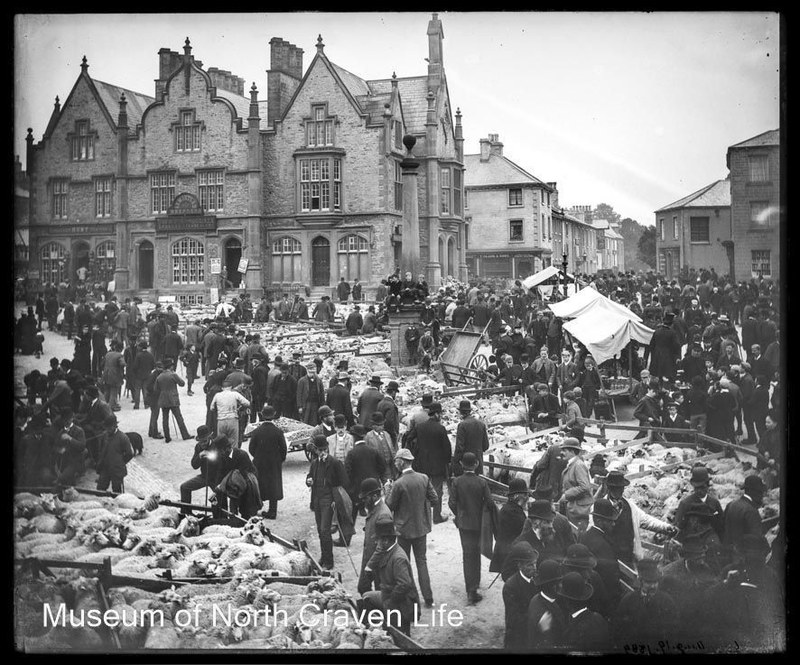
Sheep market in the Market Square, Settle, Horner Photographic Studio Keep the year 1832. Now you have three carved dates.
How we know
- “Datestone inscribed 'ERECTED 1832'” Historic England's listing of the Town Hall. See the page
The last clue
You kept three carved dates. Which is the oldest?
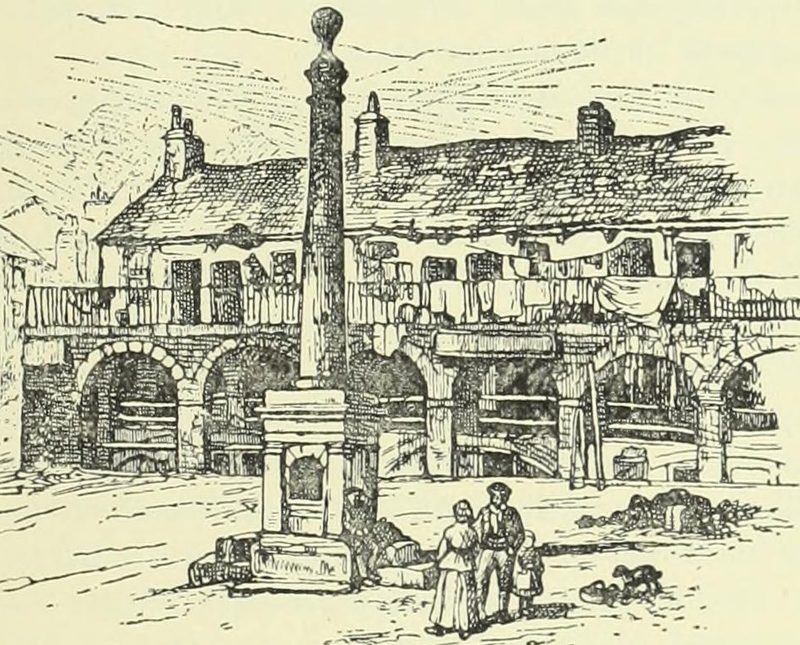
The Naked Man is the oldest. He has watched over the Market Place since 1663. Long ago, the market cross stood in this square, and under the cross was a dungeon. Harry Speight said it lay between the fountain and the Town Hall. Go and stand there.
You found it
You are standing over the Black Hole. It was the town's old jail: a wretched dungeon under the ground, reached by a flight of steps at the foot of the market cross. Children were frightened of it. More than 150 years ago the town filled it in and laid the road over the top, so you cannot see it. But it is somewhere under your feet.
Market Place, Settle How we know
- “The old Jail, or Black Hole, was a wretched underground dungeon entered by a flight of steps at the foot of the cross, and which thirty odd years ago, stood between the present Fountain and the Town Hall. It was then filled up and the road macadamised, so that its presence is not now discernible.” Harry Speight, 1892. See the page
- “The Market Cross has shifted its place and altered its form at least three times within living memory. The most ancient of these erections canopied the "black hole," a terror and subject of fearful imaginings to juvenile culprits at least. ... was formerly an underground tenant of Lawkland Wood, and was roused from obscurity to overlook Settle Market in 1836.” Settle Chronicle, 1863. See the page