UK · England · North Yorkshire · Craven · In Gearstones
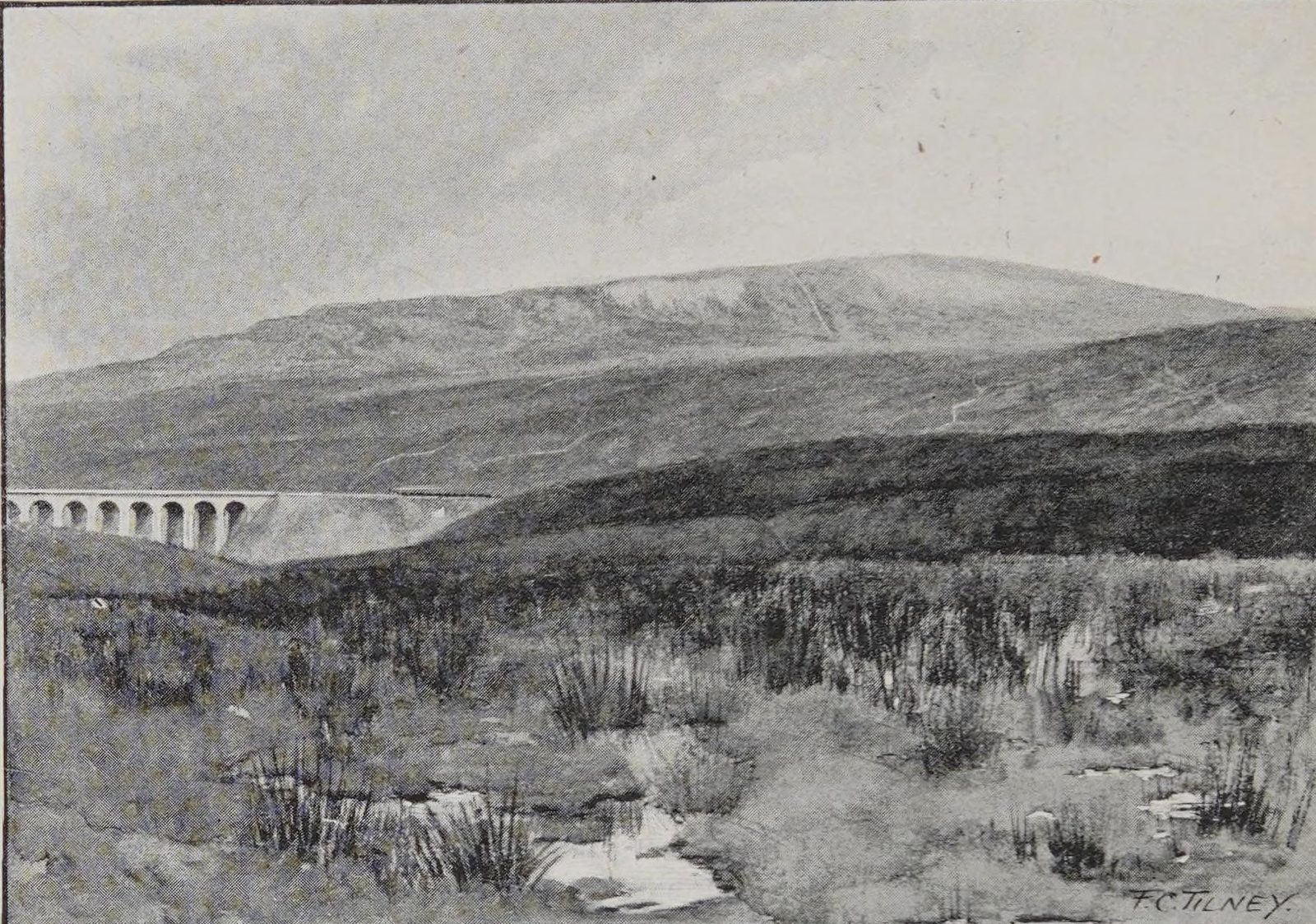
Ribblehead Viaduct
What the writers say
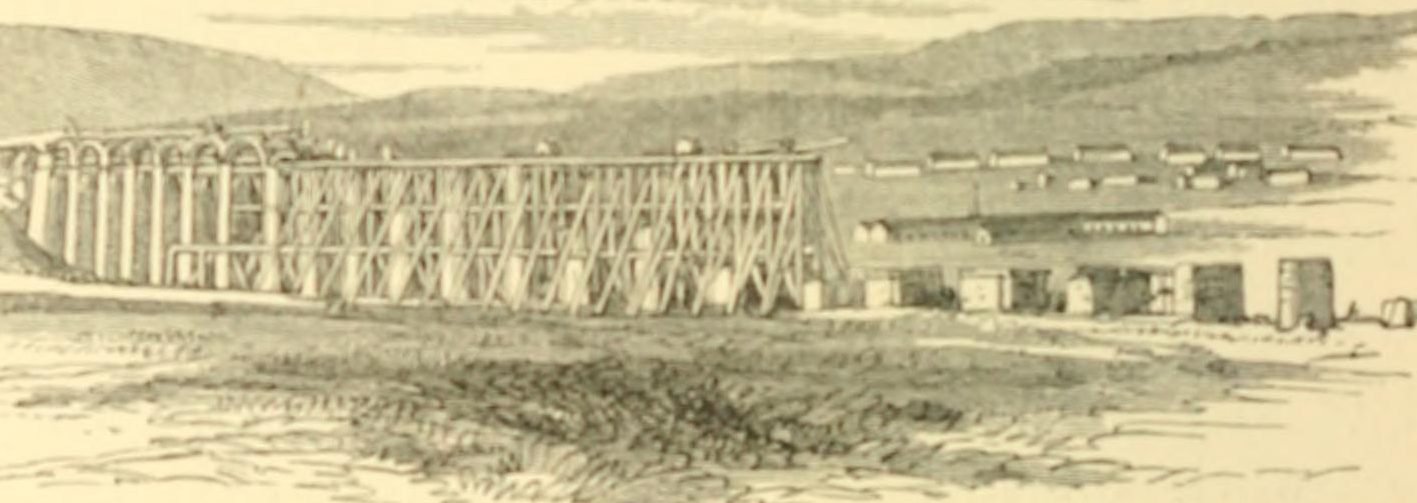
Williams visited while work on the viaduct went on, between 1870 and 1874. He describes huts for 2,000 navvies, a shanty town like a gold diggers' camp, and wind strong enough to stop the bricklayers. Speight tells the story of Batty, whose wife drowned in a pot-hole there.
-
1871 · 7 October 1871
“On the 29th ult, at Batty Green,. Mary, daughter of Mr. John Pugh, railway ... aged 7 weeks. Ingleton Fells.— On the ... inst, at Batty Green- Richard, son of Mr. John Pugh, railway laborer”
Lancaster Gazette, a newspaper, in the British Newspaper Archive's free search extract. See the page
Source and note
Lancaster Gazette, 7 October 1871, page 5; the words come from the free extract the British Newspaper Archive's search shows, page 5.
Two of John Pugh's children died at Batty Green, two days apart. The extract's text is garbled at Richard's age, which seems to read 4 years.
-
1872 · 8 March 1872
“Batty Green presented a scene of great animation”
Lancaster Observer and Morecambe Chronicle, a newspaper, in the British Newspaper Archive's free search extract. See the page
Source and note
Lancaster Observer and Morecambe Chronicle, 8 March 1872, page 2; the words come from the free extract the British Newspaper Archive's search shows, page 2.
A foot race for the championship and ten pounds.
-
1873 · printed 1873
“All that winter there were ten of us living in that wan, and a tight fit it were, surely. Of a night I used to have to stand by it for half an hour with the bull's-eye as a guide to the men home-coming through the waste.”
Mr Pollen, as Archibald Forbes calls him, a former navvy who kept a shop at Batty Wife Hole. See the page
Source and note
Archibald Forbes, Glimpses through the Cannon-Smoke (Boston: J. R. Osgood, 1881), 'An Evening Party among the Navvies', page 17.
He had come to the moor in a van three years before, when there was nowhere else to live. He and a neighbour built their cottage the next spring.
-
1874 · 12 September 1874
“viaduct on the Settle and Carlisle Railway, at Batty Green is almost completed”
Lancaster Gazette, a newspaper, in the British Newspaper Archive's free search extract. See the page
Source and note
Lancaster Gazette, 12 September 1874, page 5; the words come from the free extract the British Newspaper Archive's search shows, page 5.
Batty Green is where the Ribblehead viaduct stands. Other reports in the same search speak of navvies working at Batty Green and of the huts there.
-
1876
“The first stone of this vast structure was laid by Mr. William Ashwell, October 12th, 1870; and the last arch was turned in October, 1874.”
Frederick Smeeton Williams, railway historian, who visited the works. See the page
Source
The Midland Railway: its Rise and Progress (London: Strahan, 1876), page 498.
-
1876
“The town of Battj Wife had, when we visited it, a remarkable appearance. It resembled the gold diggers' villages in the colonies.”
Frederick Smeeton Williams, railway historian, who visited the works. See the page
Source and note
The Midland Railway: its Rise and Progress (London: Strahan, 1876), page 490.
The scan reads 'Battj' for 'Batty'. We corrected it.
-
1876
“The wind in the Ingleton Valley in the winter was so violent and piercing that for days together ... bricklayers on the viaduct were unable to work”
Frederick Smeeton Williams, railway historian, who visited the works. See the page
Source
The Midland Railway: its Rise and Progress (London: Strahan, 1876), page 490.
-
1879
“The houses, he said, were comfortable, and the situation healthy, but it was lonely, and "hard to leave," and there was no place of worship now, and no school for the children ... Chapel-le-Dale.”
A blacksmith at Batty Green, one of the railway men still living in the navvy town, talking to J. Radford Thomson. See the page
Source and note
J. Radford Thomson, Guide to the District of Craven and the Settle and Carlisle Railway (London: Simpkin, Marshall; Settle: H. Gore, 1879), page 72.
He told Thomson that a fair number of railway workers were still left at Batty Green. He said the nearest school for the children was at Chapel-le-Dale.
-
1892
“was often seen to hobble to the spot, and with dejected mien peer into the hole and exclaim — “Betty! Betty! where art thou, my lass?””
Harry Speight, Craven historian and walker. See the page
Source and note
The Craven and North-West Yorkshire Highlands (London: Elliot Stock, 1892), page 410.
The man is Batty, whose wife drowned in Batty Wife Hole; the hole disappeared under the railway works.
-
1892
“the platform occupying the centre of a triangle formed by three of the highest mountains in Yorkshire, — Whernside, Ingleborough, and Penyghent.”
Harry Speight, Craven historian and walker. See the page
Source
The Craven and North-West Yorkshire Highlands (London: Elliot Stock, 1892), page 405.
Visit
From the guide. Nobody pays to be here.
Ribblehead Viaduct
Trains on the Settle-Carlisle line cross the Ribblehead Viaduct.